Category Archives: General Interest

Dutiful women and needlework

NormaFrableMy mother, as a young nurse.

The post I wrote about basics,  practice and self-discipline brought to mind many things.  First, I’d like to explain that Rose Wilder Lane was a self-made woman.  She was the daughter of Laura Ingalls Wilder and it was through Lane’s very successful journalism career, that the Little House books were published.  Rose Wilder Lane grew up in poverty, where her parents moved several times as their farms failed.  Lane taught herself several languages and journalism.  She became one of the highest paid journalists in the 1920s and was also a successful editor and novelist.

When Rose Wilder Lane was younger she dabbled in supporting Communist ideology, which was common among journalists and the American left when the Russian revolution was thought to be the advent of great freedom for the Russian people.  Lane later rejected Communism and became a prominent figure in the American libertarian movement.  Regardless of your political views, Rose Wilder Lane is one of the most fascinating women of the 20th century – a truly remarkable woman.   Her needlework book I mentioned is a very interesting read.  Woman’s Day commissioned her to write their Book of American Needlework, because not only was Lane a famous journalist, novelist and historical writer, she was an expert needlewoman.  Her book, The Discovery of Freedom, is another truly amazing read too, no matter where you fall on the political scale.  The Mises Institute offers it free: Here.

I love counted cross-stitch and various types of decorative needlework.  Thinking about needlework basics made me think of my mother.  My parents had 7 children and my older brother died in infancy several years before I was born in 1960.  My father did road construction and my mother was a registered nurse, who always worked.

My mother grew up in poverty too.

My mother kept our house immaculate and was a superb cook and baker.  We had a garden and my mother canned a lot of vegetables in the summer.

In previous posts, I mentioned that my mother was very good at fixing things and she was good at electrical wiring too.  My mother loved crewel embroidery and she did lovely beadwork on satin for several ringbearer pillows that she did for people. However, I only recall a few crewel pieces that my mother did, because although my mother loved decorative needlework, she had six kids and she dedicated many hours to and was an expert at mending our clothes.  She also was an expert at stain-removal and laundry.  Every piece of clothes she washed was folded neatly and put away.  She ironed a lot of stuff, then taught us how to iron.  I loved doing laundry, especially hanging the clothes outside on the line and I loved ironing as a kid.

I took time to myself and did decorative needlework, despite having four kids and being a stay-at-home Mom.  I also hate mending clothes and did very little of it.  When my mother would come visit, she would gather up all my kids’ clothes that needed mending and patiently sit and repair it.  The reason I am not good at “finishes”, turning finished cross-stitch pieces into decorative pillows and wallhangings, etc., is finishes require other stitching and I never took the time to learn practical stitches, unless I felt like it.  So, I now need practice at simple stuff, like ladder-stitch, because when I was younger I would have just whip-stitched small stuff closed.  I was only interested in decorative stitches.

My mother also assigned chores that my brothers and sisters and I had to do.  When I had children, my mother constantly told me that I needed to make my kids help clean and do more around the house.  I was very lenient with them on chores or even cleaning their rooms.  I also am not as disciplined as my mother was in running a well-ordered home.

My mother was the hardest working woman I have ever known.  We would tell her to get more rest, because often she would work the 3pm to 11 pm shift at the hospital and then come home and spend most of the night doing housework.  Without fail, she would be up early in the morning and work in the house until it was time to go to the hospital at 3pm.  One of her favorite sayings was, “I’ll have plenty of time to sleep when I’m dead.”

My mother wore an old red sweater in the winter time to shovel snow or carry the ash buckets outside from the cellar. Our house had a coal furnace that required manual labor to shovel coal into it and my mother shoveled a lot of coal to keep our house warm in the winter and to heat hot water year-round.  She mended that red sweater over and over through the years.

When my mother passed away, my sisters in PA, took her old red sweater to the funeral home and had it placed in the corner of her casket.  My mother never bought a lot of clothes, but she kept everything she owned in pristine condition. Whenever I sit and do needlework, I think about my mother’s old red sweater and now that I am getting older, I think about how I didn’t even take the time to mend my kids’ clothes, because I hate mending clothes.

Mending clothes reflects a virtue – it is a belief that you should not be wasteful and that you should take care of your clothing and keep it serviceable for as long as possible.  We became a disposable culture and it shows in how we do everything, not just in regards to how we care for our clothing.  We became an “I” culture, fixated on self-indulgence above all else.  This buying more and more “stuff”, without even using most of the “stuff” we already have is another symptom of this wasteful culture.  It is corrupting the moral fiber of the American people.  We are the most wasteful and self-indulgent people on earth.

Most of the needlework I have done has been for gifts,  although there are a few pieces I’ve kept for myself.  I’m trying to learn to finish small pieces, so I can give nicer gifts to my friends and family.

Someday, I hope that I might develop as selfless and good character as my mother, who put other people before herself, at home and at work, always, but I doubt that I can be as dutiful to caring for others as my mother was.
1 Comment

Filed under American Character, General Interest

Stitching “smalls” practice

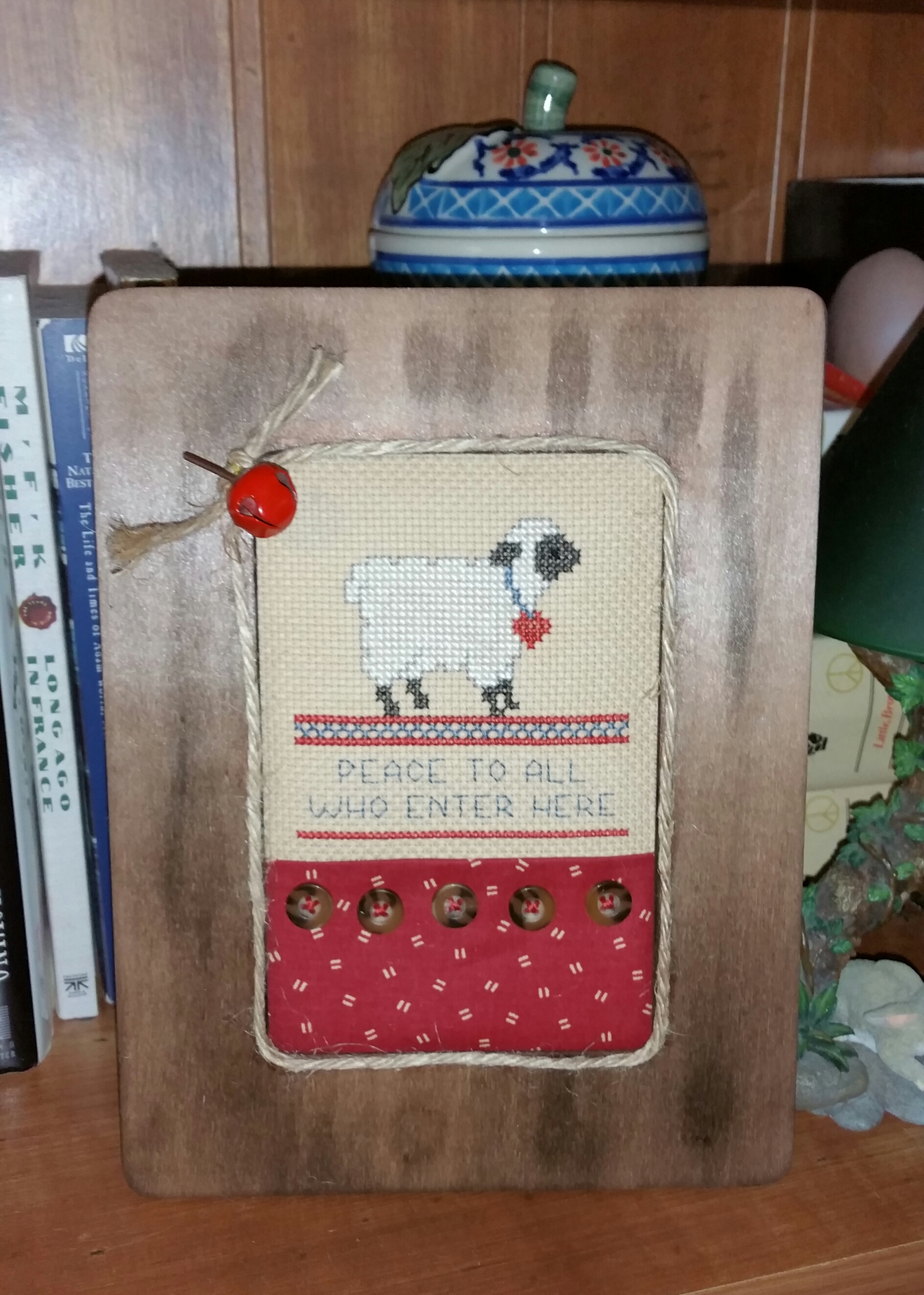
Bought a $2 unfinished craft frame at Dollar General.  Stained it with my brown scrapbook ink. Had the buttons and fabric.

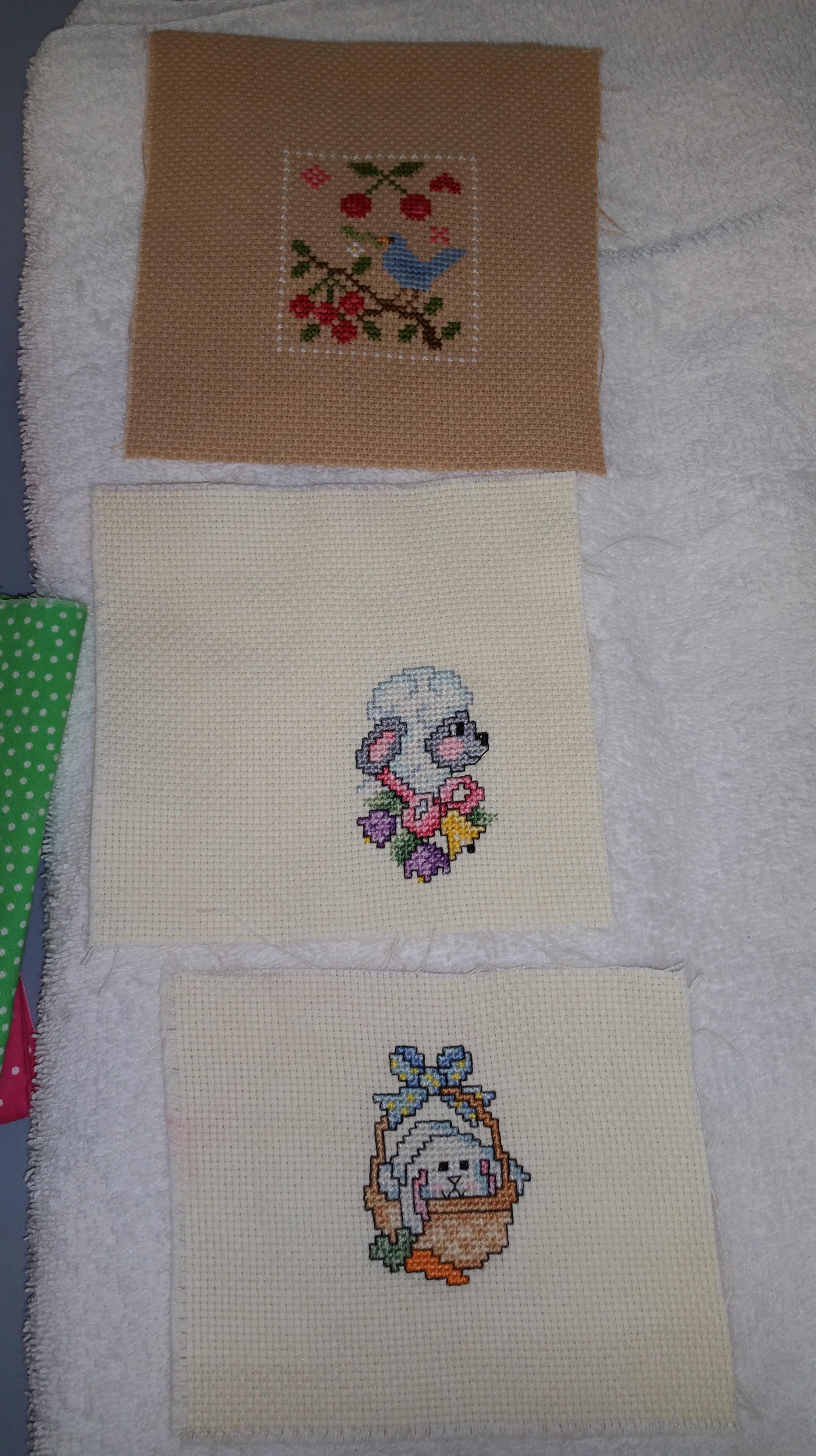
I’m still trying to use up scraps of Aida cross-stitch fabric as practice learning how to finish small cross-stitch pieces into something…  The top pattern was a free pattern online.  The bottom two, well, I spaced them close together thinking I would do 4 of these small, Walmart Easter clearance kits together.  I bought these kits years ago.  While stitching the bunny, I dreaded the thought of 2 more of these tedious kits.  The lamb will be tricky finishing, since I have very little space along the bottom,

Here are the other 2 kits I was going to put with them.

Another free pattern, this one from a German website.  Still need to finish stuffing this and stitch it closed, then trim it.

Free pattern from Snowflower Diaries, a Hungarian designer’s website.  Stitched this for my oldest daughter, whose birthday is at the end of May.

I think this free pattern was from a French website and tentatively thinking about this fabric and trim, that I had.

wp-1491906640020.jpg

A free pattern, not perfect stitching on the bottom and I added a button on the white ric rac trim, before giving it to a dear friend.

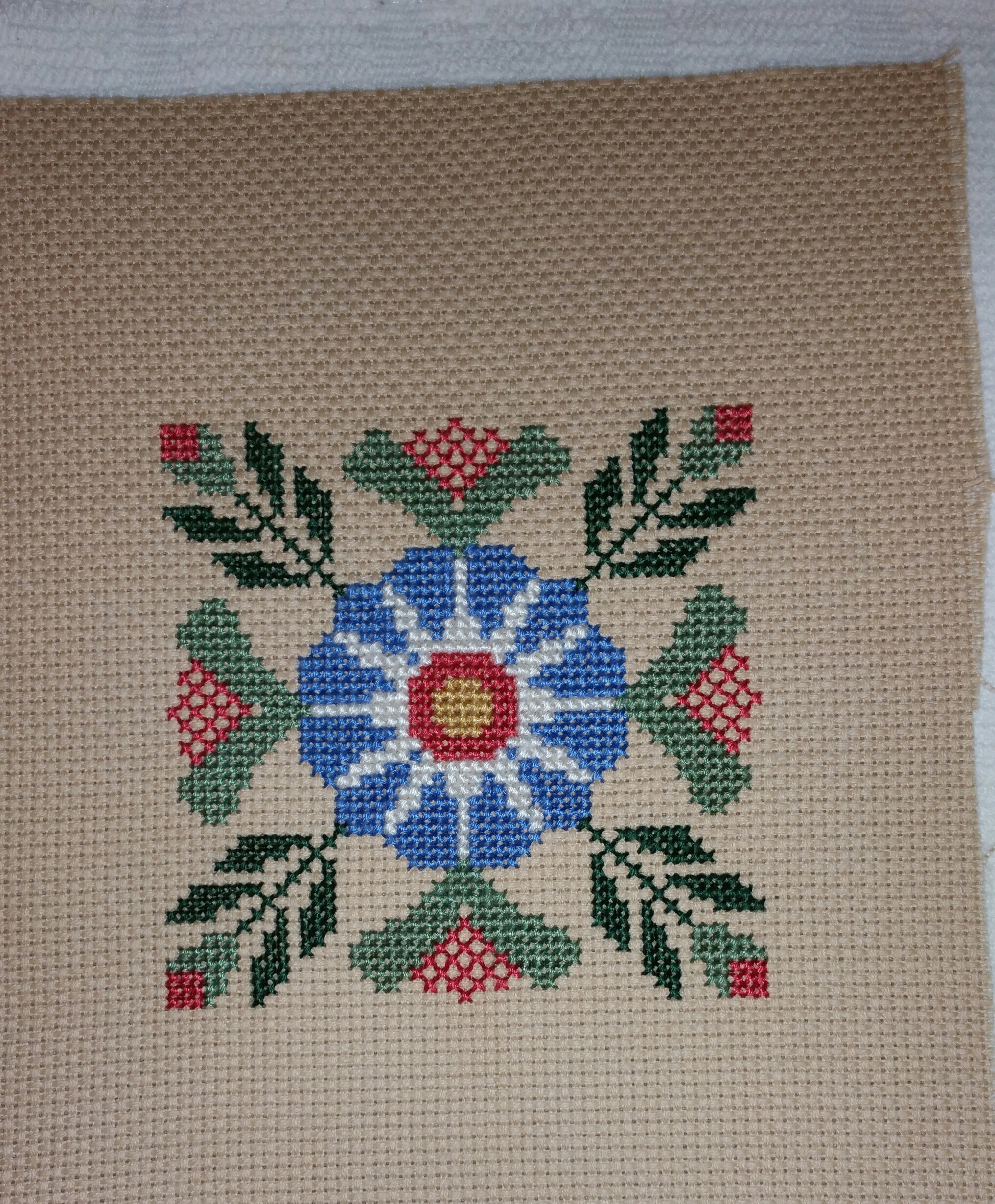
Stitched this from an old cross-stitch calendar, I had.  It’s just one motif in a sampler, I pulled.  It’s about 4″X4″.  When I sent a picture to my youngest daughter, she suggested I change the corner flowers to blue or put some sort of blue border around it.  I’m thinking about maybe making cording using the blue and white embroidery floss instead.

Oh, yeah and Comey testified in front of Congress…  Still following the DC soap opera too.

1 Comment

Filed under General Interest

When everyone gets a gold star

” In the days when all properly brought up little American girls stitched their samplers, as all little boys did their chores, they wrote verses in each other’s Autograph Albums to record the eternal friendships of first days in school.  Their careful Spencerian penmanship is faded now on the brittle pages where you read two verses often repeated, the first usually signed by Abner or Joseph, the second by Eliza or Phoebe:

When Duty whispers low, “Thou must,”

The youth replies, “I can.”

And

Straight is the line of Duty,

Curved is the line of Beauty.”

p. 52, chapter on Cross-Stitch, Woman’s Day Book of American Needlework, by Rose Wilder Lane, published in 1961

The oft repeated line for little boys comes from an 1863  Ralph Waldo Emerson poem titled Voluntaries.  Sage Stossel, in a piece in The Atlantic explains that the poem, “paid tribute to those prepared to sacrifice all for the sake of the Union. The final four lines of the stanza below are among Emerson’s most famous, and have been inscribed on veterans’ memorials around the country.”  That “Duty” the above verses speak to is a concept America’s founding fathers embraced and which J. Rufus Fears, the late historian and professor of Classics at the University of Oklahoma, described simply as:

“Civic virtue: The willingness of the individual to subordinate himself to the good of the community.”

In previous posts I’ve expounded on the demise of civic virtue in America and how it all begins in American families and communities, where the seeds of civic virtue must be planted and nurtured.   We have child-rearing experts, from child psychologists to educational professionals to celebrity experts and yet in bygone eras, most people, with few resources, managed to train and educate their children to be citizens of good character.

For a needlework book, Rose Wilder Lane, managed to explain a great deal of American history, along with the history of American needlework.  In the chapter on Cross-stitch, Lane offered photos of several American samplers, which young girls stitched to both learn how to stitch and as a future reference for various stitches.

Many of the samplers contain the girl’s name, age, and the year the sampler was stitched.   Some of the most beautiful samplers were stitched by girls  as young as 9 or 10 years old.  These girls designed their own samplers and diligently stitched them as Lane describes:

“Dutiful those little girls were required to be, silently repressing their rebellion while they did their daily “stint” of stitching that must be done before they would be allowed to play.  And the beauty of their work is in its four-square character, strictly faithful to the straight line  Yet, it is a gentle beauty, for in the beholder’s eye the straight line becomes a curve of vines and flowers, of woodland bird and rabbit and deer and of the darling dog and the long-tailed mouser on the hearthrug

So those grim hours of duty unexpectedly produced the deep joy of work well-done, a triumph earned by difficult self-discipline.”

p. 52, chapter on Cross-Stitch, Woman’s Day Book of American Needlework, by Rose Wilder Lane, published in 1961

Lane also describes a sampler completed by a girl, aged 14 and points out how that girl lacked self-discipline and should have been ashamed to produce such shoddy workmanship at her age.  Lane dissects how the girl began her sampler using harder stitches and patterns, which she abandoned for simpler stitches and poorly drawn motifs.  Lane attributes this to indulgent parenting and that the results show that girl was not required to do her “stint” of stitching daily.

The thing that Lane is referring to is the character-building beliefs and attitudes that created people like our founding fathers.

These beliefs dominated until progressive attitudes in the late 1800s gained a foothold and throughout the 1900s this new belief system trampled civic virtue.  The age of “I” took hold, where at every turn the belief, that above all else, “how you feel matters most”.   The suggestion, that there is value in self-discipline, self-restraint or self-sacrifice, in anything, will be met with anger and hostility.  You will be quickly cast as mean and a hater.

American academia is filled with nostrums to fix the social and political ills, that experts and pundits galore all agree are destroying America.  Most fixate on political panaceas rather than address the cultural attitudes and mores that produce our corrupt political morass.  It’s politically incorrect to point out the failures in parenting, the failures of individual citizens to learn civic values and live them, and the failures of the American spirit.  And into this self-indulgent culture, those who suggest “standards”  or behaviors that bolster the values, upon which civic virtue is built, will be attacked immediately as mean-spirited fascists.

In our schools, kids today are taught to care more about their own feelings than about learning to read, think, or acquire knowledge.  In the early 90s, our oldest daughter was in elementary school.  She wrote an essay and received a 100 as her grade on this pathetic effort.  I asked her teacher how on earth this essay deserved a 100 and the teacher acted like I had grown horns.  She lectured me about how important it is to encourage “creativity” and how I didn’t understand how fragile children’s emotions are, etc. etc.   For the record, children are completely self-centered and need to be taught how to care about other people.

The problem with my daughter’s essay was she used no capitalization and no punctuation and she sure isn’t ee cummings.  In addition her spelling was appalling, so it was almost impossible to make sense out of what she had written.  I knew my daughter could spell, write and use punctuation much better than her lazy effort.  When we got home, I told my daughter that despite what her teacher said, trying to do your best matters and that I knew she could write much better than that effort.

When everyone gets a gold star, a gold star means nothing.

I worked in Walmart almost 15 years, holding several positions, including being the department manager in fabrics and crafts a number of years.  Working in Walmart is like a social laboratory of American social pathologies, especially the fixation on “stuff”.   Speaking as a hoarder of craft and sewing supplies, I diagnosed my own bad behaviors years ago and am still working on gaining more discipline about my craft and needlework shopping habits.  The buying-too-much-stuff problem is a common behavior among way too many needleworkers, hobbyists, computer gamers, sportsmen, outdoorsmen and in every recreational pursuit.  Each pastime comes with a lot of “stuff” that we want.

Often, when talking to customers who were new to craft and sewing supplies, I would discuss what they were working on or wanted to work on and direct them to the supplies we carried.  I also would often direct them to websites or books where they could learn more about the basics of that particular craft or needlework.  There’s a mindset in America that has taken over quilting and needlework, that if you buy the “right” stuff (expensive frames, gadgets, fabric), you will be able to create beautiful work.  The entire building blocks, of learning the basics first and taking the time to practice those basics skills, are lost in the mindless pursuit of buying more and more “stuff”.

This same attitude prevails in the attention-seeking Reality TV culture and social media culture, where even thousands of cross-stitchers have their own floss tube channels, where they talk about their cross-stitch and offer support and encouragement to each other (mostly to promote mindless acquisition of more “stuff” and starting lots of projects).  Although, in the mix there are plenty of amazingly talented needlewomen out there.  For the record, I am just a competent cross-stitcher, who works hard to keep my stitches neat on the front and back of my work.  I have the build of a PA Dutch farm woman, as befitting my heritage, and I have large hands and wear a ladies size 11 shoe. Mine are not the dainty fingers of a needleworker.

Whenever I learn a new type of needlework, I try to learn the basics first and practice a lot.  My mother taught me simple rules about embroidery and I still follow them.  These rules are in the instructions in almost every cross-stitch kit and book too.  They aren’t my mother’s rules, but the time-tested standards for embroidery, of which cross-stitch is a popular type of embroidery.

Anywhere in social media, I run into issues stating facts or an opinion that offends someone or evokes anger, so it was no surprise to me that on floss tube, I would offend someone.  The prevailing attitude is it’s taboo to say anything is wrong, apparently, even when what people are promoting is not only wrong, it’s a recipe for disaster for new stitchers.  Some stitchers started a facebook group called “Stitch Maynia”, which began as some event in May, where they focus on starting a new cross-stitch project every day in May.  Their focus is all about starting new projects, not about finishing what they start. They believe they are promoting cross-stitching and doing something good.

There’s now also a common attitude among many stitchers that it doesn’t matter how the back of their work looks, it’s all about that stitching makes them happy.  If you don’t care that your work is sloppy and a messy back on needlework is sloppiness (that’s a FACT), fine, but once you have a facebook group and a floss tube channel, with thousands of followers, well, you can become a corrupting influence very quickly.  This happens with Reality TV stars constantly too.

I tried to point out to a fairly new cross-stitcher that from years of experience with needlework and crafting, that starting too many projects leads to lots of unfinished projects and also added stress.  To keep track of this madness, there are floss tubers waxing on about all their “WIPs” (works-in- progress) and the spreadsheets, stitch journals and stitching schedules, they are using to keep track of it all.  Into this chaos, they insist they love stitching and starting so many things makes them”happy”.  For a new stitcher, this approach assures lots of wasted money, lots of unfinished projects and lots of poor needlework.

There is no foundation, of focused practice and good stitching habits, upon which excellent stitching is built.

One of the ladies who promotes sloppy needlework at Stitch Maynia quickly tried to tell me I was wrong and that it’s all about being happy stitching and that the back doesn’t matter.  She also told me she has 20 years experience at cross-stitch.  I didn’t even bother to respond, because it’s lost on her.  She has no idea how sad it is to smugly state she’s proud of doing sloppy needlework for 20 years. Sadder still is most of these needlewomen, caught up in this “feel-good” ethos will follow her advice and believe I am mean for stating that standards in needlework (just like everything else we take pride in) matter.  She proudly told me Stitch Maynia has 9,000 followers.

People of good character, not government programs, build a society based upon civic virtue.

Good work habits matter.  

Practice matters.

Lazy, sloppy habits and work should not be cheered on or promoted, in tasks, whether small or large.

Learning self-discipline is the key to building good character.

It really is that simple.

3 Comments

Filed under American Character, Culture Wars, General Interest, Things That Matter

Standards of excellence… or not

wp-1493051949855.jpg

Do standards matter and are they worth teaching and preserving?

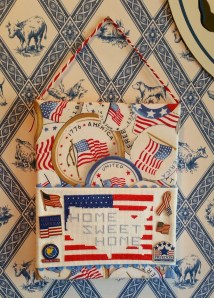
A month or so ago, I stitched this small American-themed design to add to my “I love America” room, which is the foyer by my front door.  That space is approximately 4 feet X 10 feet.  I get lots of ideas for this small area, as I mentioned in a previous post: here.  The foyer had vinyl flooring when we bought this house in 1994 and although there was a chair rail trim, about halfway up around the walls, above and below the chair rail were an off-white color.   It took me a few years to find the wallpaper I wanted, which has an English hunting vibe.  Above the chair rail is the animal print and below the chair rail is a coordinating striped-print.  My husband hung the wallpaper, but then I decided I wanted hardwood flooring in the foyer.   However, after shopping around and asking a lot of questions, I decided I wanted a vinyl flooring that was cut into “planks”, like hardwood floors.  The easy maintenance and durability, with having 4 kids and dogs in the house, sold me on the vinyl option.  These vinyl look-alike planks were about the same price as going with hardwood flooring.  My husband laid these vinyl planks, but in typical LB style, I had looked at hardwood floor designs and decided that I wanted them laid in a herringbone pattern.  So, I showed my husband some pictures from a book and he drew it all out on paper with measurements, then installed my herringbone floor.

About 10 years ago, we replaced flooring and carpet in our home and my husband really wanted tile flooring in the kitchen, bathrooms and foyer.  I opted for a high-quality vinyl “tile” floor for in my kitchen, because it’s not as hard to stand on cooking and it’s not as cold as tile on concrete-slab homes here in coastal GA.  He got his real tiles in the foyer and bathrooms.  We had someone install the tiles, because my husband wasn’t in good health, by that point.  I missed my herringbone pattern on the floor, but these big tiles are nice too.

My beloved wallpaper should be removed, but I am hanging onto it as long as I can.  The above craft project isn’t anything great, but I am satisfied with it.   Instead of just framing that little piece, I opted for trying a finishing using a paint canvas.  The fabric is a print I love, which I had sewn into a travel-size pillowcase years ago.  I used a travel-size pillow on my lap for propping my Q-snap frames or embroidery hoops, when I do needlework.  Lucy, my stray-dog rescue, loves to chew holes in the corners of throw cushions and even furniture cushions.

This is partly another “happy hoarding” story, as after she chewed the corners off my travel-size pillowcase and pillow, I washed that damaged pillowcase and kept it with my patriotic fabric.  Last night, I cut up the pillowcase and used one side of it to cover this paint canvas, then I added some rickrack trim and the cross-stitch.  I am keeping the rest of that pillowcase too, because I can use it for the backs on some small patriotic-themed cross-stitch pillows.  I decided to add the pins, which were a set of 6 pins I bought at a yard sale years ago.  The hanging ribbon, was just ribbon that I twisted up to look like cording.  There are obvious imperfections, but overall I am satisfied with it.   It’s a small piece that I can stitch up again, easily and finish it differently or I can take this apart and finish it differently, if later I decide it needs improvement.

The “imperfections” are really what this blog post is about, despite it taking over 500 words for me to get to the point. The lack of concern with doing things “right”, maintaining “standards” and the pervasive willingness to heap praise on mediocre work is as destructive to the moral fiber of our society as all the more obvious cultural revolutions in the past century.  This attitude, that how you feel about your work matters more than the quality of your workmanship, permeates even into needlework.

The 2016 election, with two venal, lying, corrupt candidates, both running vile scorched earth propaganda campaigns left me wondering how on earth, these two disgusting candidates could be the candidates the two major political parties put forth.   More Americans, who voted in the primaries, opted for these two candidates and that speaks volumes about the state of our republic.

As mentioned in a previous blog post, I started watching embroidery videos on YouTube, then discovered “floss tube”, where cross-stitchers post videos about their work.  I wrote:

  “The usual floss tube video seems to be about an hour, divided into sections of show and tell about finished projects, works-in-progress (WIPs), and “Haul” (more cross-stitch junk purchased).  Then there are a few floss tube contributors, like the expert needlewoman , Mary Rose, named after Mary, Queen of Scots, who present much shorter, highly educational and deeply thoughtful videos that deal with much larger life lessons.”

My craft project last night was a technique, covering a paint canvas with fabric, which I saw on a floss tube video by Silvia.  Silvia, who posts under the name beckisland, is a sweet, German lady who stitches small cross-stitch pieces and finishes them in creative ways.  Silvia is very dedicated to doing the best work she can and often she will dissect an older piece she finished and discuss what she isn’t happy about with her work and how she would do it differently now.

She’s focused on excellence.

Since floss tube is an informal community, people from around the world post their videos, which offers an unfiltered look at the good, the bad and ugly (and not just about cross-stitch).

Last year, I mentioned another YouTube video by  Dr. Saul Cornell, the Paul and Diane Guenther Chair, American History, Fordham University.  His video explains the concept of civic virtue.  At minute 26:56 Dr. Cornell discusses how after the American Revolution women in America started including elements of American civic values into their needlework samplers:

Listening to people is a lifelong hobby of mine too, so watching these videos, I detected that many of the same attitudes and beliefs that are corroding our social fiber, have had an effect on needlework too.

There are stitchers posting videos in which they declare that they don’t care if the back of their needlework is a knotted up mess.   There are plenty of stitchers who make comments that the back of their work isn’t neat and they are embarrassed about it, because they know it’s not up to accepted standards.  These younger stitchers, who boldly proclaim those standards don’t matter offer an assortment of rationales… like “my friends love my work and I love my work, so who cares” or “the back of your work only matters if you’re entering your work in needlework competitions” or “no one sees the back, so who cares”.

Keeping the back of your needlework as neat as the front is a standard of excellence in needlework, because the neatness on the back assures the stitches on the front will remain snug and keep their shape.  Neatness on the back also assures there are no unsightly lumps on the front from tangled and knotted threads on the back.

I’m trying to use up scraps of Aida cross-stitch fabric, that I’ve had since the 90s, for small projects.  I stitched this little piece on an old Aida scrap yesterday.  My back is pretty neat, but I need to improve on neatness with my backstitching, where the lettering is.  The creases in the fabric are where it was folded in a box for years and then wrinkles from my hoop.  With washing and pressing, I will get all of those out.  I try to trim loose threads as I stitch, because loose threads are like pythons lying in wait, ready to wrap around other threads and they create tangled nightmares.

This post ran way longer than intended, so in another post, I want to discuss how this disregard for standards of excellence hits you in the face at every turn… even on needlework videos.

It is destroying the American character.

1 Comment

Filed under American Character, Food for Thought, General Interest

A teachable moment

Over the weekend I saw a short news clip of a reporter interviewing attendees at a “Tax March” in CA.  They were asked what they were protesting.  Several gave various incantations of Trump is not their president, but one woman apparently had read the full march organizers’ talking points, judging by her list of invective against Trump and demands that he release all his tax returns.  This woman claimed President Trump is breaking the law by not releasing his tax returns.

She is wrong, of course, as there is no legal requirement that presidential candidates release their tax returns, although there is a tradition.

In typical leftist fashion, the Tax March came with its own symbolic gesture – the Trump chicken:

“Tax March, it turns out, also has an unofficial mascot: a giant inflatable rooster known colloquially as “Trump chicken.”

A Seattle-based illustrator completed a design in November for a company that wanted a statue for the Chinese New Year to commemorate the Year of the Rooster. The original 23-foot fiberglass statue was installed outside a shopping mall in northern China at a time when relations between China and the United States were especially strained.

An activist in San Francisco later came up with the idea of buying replica inflatable chickens for use in the Tax March, Ms. Taub said. She said the chickens were a “good symbol” for the march, both because she said Mr. Trump was too scared to release his tax returns, and because the chickens are more fun and entertaining than tax policy.”

https://www.nytimes.com/2017/04/15/us/politics/tax-day-march.html?_r=0

Most Americans live in a reality-based world, so they’re not paying any attention to the Left’s Trumper tantrums anymore.  These marches aren’t galvanizing millions of mainstream Americans to take to the streets.

Most Americans have accepted that Donald Trump is the President of the United States and even within the Left’s ranks there’s discord and growing disagreement about how to counter Trump and his agenda.

Far beyond the rancor of partisan politics in America, the very fact that most Americans still believe in following The Constitution and haven’t been swayed by the Left’s relentless efforts to overturn the 2016 election, through massive mass media propaganda efforts, sparks hope for America’s future.

Despite all the dumbing down in America’s schools and despite the wasteland of American culture, that most Americans still believe in playing by the rules makes me optimistic for America’s future.

Perhaps, the 2016 Presidential Election will turn out to be both, a pivotal and a positive, to borrow the Left’s catchphrase… teachable moment.

I am hoping for many more.

Leave a comment

Filed under Culture Wars, General Interest, Politics, Uncategorized

Wishing You A Happy Easter!

Leave a comment

April 16, 2017 · 8:22 am

Coughing up catchphrase strategic hairballs

In light of President Trump’s decision to order airstrikes in Syria against Assad forces this past week, I’ve been awaiting some hint of a comprehensive regional strategy for, not only defeating ISIS, but for the gigantic strategic elephant in the room (power vacuums across the region), that assure continuing fertile ground for Islamist nutjobs to reseed and grow for decades to come.

ISIS was Al Qaeda in Iraq.  The belief that driving them out of Raqqa holds some sort of magical strategic power eludes me.  The belief that ousting Assad opens some magical door to peace in Syria and a grand opportunity for the people of Syria, also eludes me.

The regime change cadre, like General Keane, John McCain, and  Lindsey Graham are ecstatic, but these are the same people who place a lot of trust in Elizabeth O’Bagy and the Institute for the Study of War’s analysis with their “Syrian moderates” magic carpet ride.

I was going to await General McMaster’s appearances on the Sunday shows, before commenting, but here’s how I see the pros and cons from Trump’s actions.  The pros:

  1. Pushing back against Putin and Iranian power plays in Syria bolsters U.S. credibility as a world player, not afraid to act.  Count that as very positive.
  2. Grounding Assad’s air assets is also very positive with more U.S. troops on the ground in Syria
  3.  On purely symbolic PR grounds, Trump’s actions showed strength and resolve.

Now the cons:

  1. Escalating military action without clear, well-defined ends leads to mission creep and can very quickly turn into a complicated strategic Gordian knots (like the one we’ve been choking on for over a decade). We are still coughing up catchphrase strategic hairballs.
  2. There doesn’t seem to be a comprehensive regional strategy.
  3. Building a strategy on false beliefs leads to very poor strategic outcomes.

That #3 is where we screw-up most often, by believing things that are not true.  Since 2012, there has been a vocal chorus among some US pundits and strategists for regime change in Syria.  There has been a belief that a large part of the insurgents in Syria’s civil war are “moderates”.   They are all varying shades of Islamists – that is a FACT.  And that FACT should cause everyone some pause.  Islamist insurgents assure that if they succeed in seizing power in Syria there will be another state run by Islamists.  Why the US should be gung-ho for establishing Sharia compliant states, I don’t know.  If past is prologue, nothing is simple in that region of the world.

Without all the “Rah, Rah, Go USA” cheerleading… I want to know what the comprehensive strategic ends are and how this dramatic military escalation fits into that strategy.

Just an added thought about articulating a strategy… the clearest American message isn’t coming from the White House, the State Department, or the Pentagon.  It’s coming from the United States ambassador to the UN, Nikki Haley.  The rest of the Trump administration should follow her lead on how to craft a clear, principled, unified ” strong American voice” on Russia, Syria and Iran.

Leave a comment

Filed under Foreign Policy, General Interest, Military, Politics, Terrorism

Learning From Mistakes

A small embroidery booklet that my mother gave to me when I was around 8 or 9 years old (circa 1968-69).  The booklet has a copyright of 1964 listed.

While sorting and organizing in my sewing room, I came across this embroidery booklet, which I have been using since the late 1960s.  When I first started learning embroidery, my mother gave me an embroidery hoop, embroidery floss, needles, small scissors and this booklet.  My great-grandmother had a closet full of boxes of fabric scraps for her quilting and she subscribed to a needlework magazine, Workbasket, which had iron-on embroidery patterns.  She gave me fabric to stitch on and let me pick out some iron-on patterns.  My mother and great-grandmother, both spent time showing me how to embroider and helping me when I ran into problems.

I ran into problems often, because I am not naturally talented at needlework (or much else for that matter).  What I am good at is practicing.  Even as a child, I set up a routine to practice things I really wanted to learn how to do or improve at doing.  I stuttered and couldn’t even spit out my name.  I spent years reading the dictionary, almost daily, and practicing how to pronounce words.

Needlework was the same frustration when I first started stitching, where instead of my tongue twisted into knots over how to pronounce words, I was spending more time dealing with tangled embroidery floss, than I did stitching.   I practiced… a lot.

wp-1490977301199.jpg

Large dictionary I spent years reading as a teenager – in need of binding repair.

My mother gave me that booklet, so that I had a reference to reread, when I forgot how to make the stitches. As my stitching improved, I began to tackle harder stitches in the booklet. I clung to that booklet and handled it carefully, because it became as dear to me as the large dictionary that came with the set of World Book Encyclopedias my parents purchased in the early 1970s.  Before having this large dictionary to study, my mother had given me a paperback dictionary to use.

The thing about learning the value of “practice makes perfect” is that even if you never achieve perfect, your skills, at whatever you’re practicing, improve.

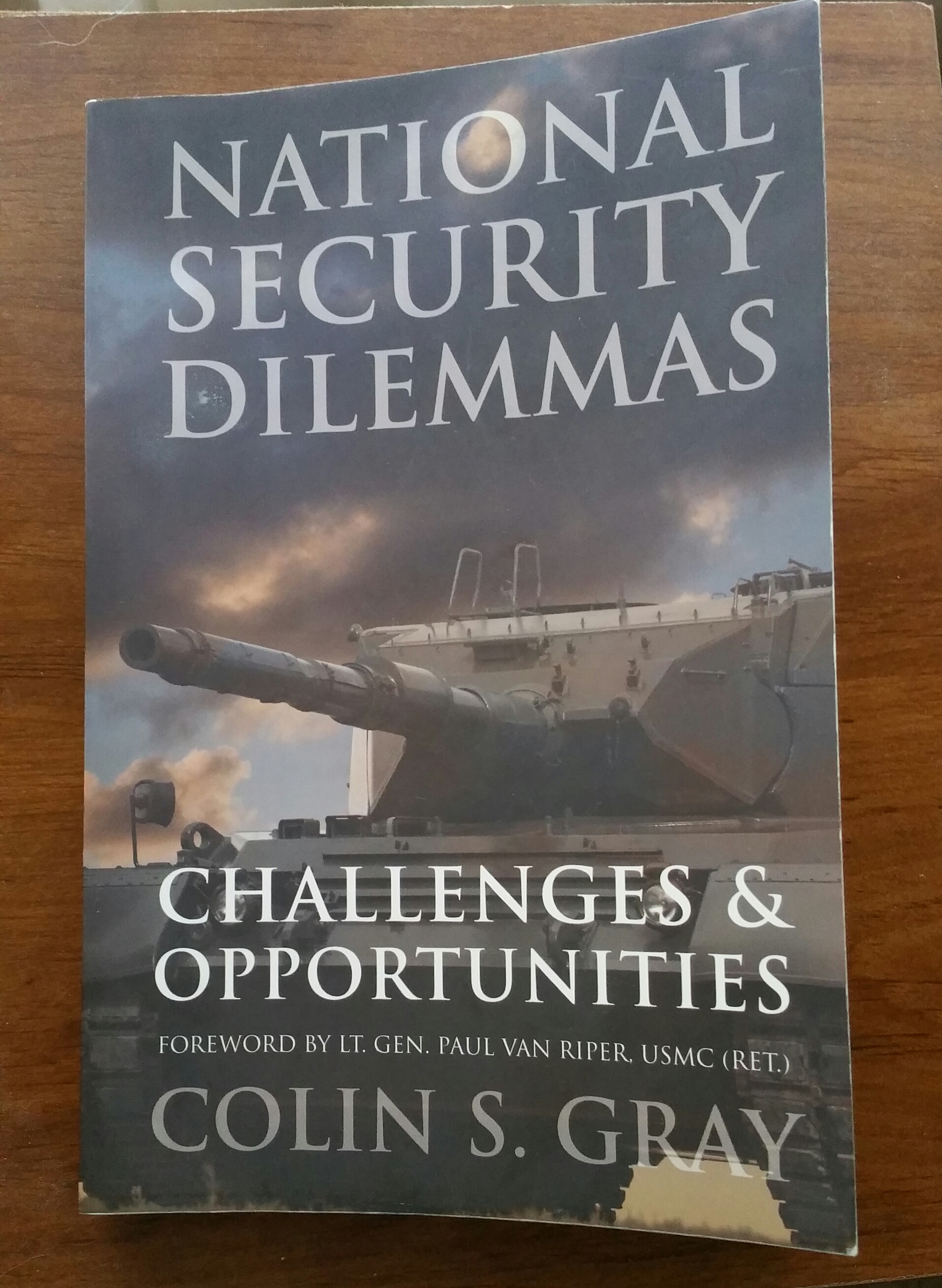
And that brings me to foreign policy.  Along with rereading my childhood embroidery booklet, I’m reading a book that I had started a few years ago and didn’t finish.  National Security Dilemmas: Challenges & Opportunities by Colin S. Gray is one of those books that returns you to the basics of national security strategy, by reminding you constantly of the “lessons learned” that we keep forgetting.

I’m not ready to do a book report, but the thing Dr. Gray often asks, when confronted with catchphrase strategic notions that permeate among the Washington policymakers and punditry class, is “So, what?”  He is analyzing based on his wide-breadth of historical knowledge and decades of meticulous research of STRATEGY.  I’ve read several of his books and many articles he’s published over the years.  He always gets down to the essence of strategy  – the basics, if you will.

Strategy basics are just like needlework basics.  If you forget the basic stitches there’s no way you can master the complex stitches.  I hadn’t done hardly any needlework since 1998, so I’m back to basics and decided several weeks ago that I need to start doing a lot more practice on basics to regain my stitching proficiency and confidence.  We still haven’t done that with our national security strategy.

The Trump administration’s national security strategy seems as immured in “catchphrase” strategic-thinking as the Obama administration’s “narrative as strategy”.  President Trump likes to hide behind the “we don’t want to tell the enemy what we’re doing”, trying to sound strategically savvy, but really just avoiding having to explain what his ISIS strategy really is.  I suspect it’s about as well-thought out as his “murdering ISIS family members to scare ISIS terrorists into submission” war crimes strategy he doubled-down on in the GOP primary debate.

In recent weeks, I’ve become concerned that his ISIS strategy, in essence, is Mission Creep.   More American troops here, more American troops there (like in Syria) and so far, little in the way of explanation.  There doesn’t seem to be any sort of laying out American national security ends and building  a big picture regional strategic framework to achieve those ends.  President Trump’s strategy seems tied to PR sound bites more than to securing America’s national interests.

Does the Trump administration have a clear strategy to defeat ISIS?

I doubt it.  Any who question President Trump are brushed aside with constant reminders that General Mattis is running the Pentagon and General McMaster is a strategic genius.  That doesn’t explain the strategy to me.  That is citing “experts” to validate a strategy, that has not been explained.  It’s a dodge.

So, I’m very wary of  President Trump’s foreign policy and at the same time, I am heading back to the basics… in both my needlework and studying strategy.

More later.

Leave a comment

Filed under Foreign Policy, General Interest, Military

Threads of Civic Virtue

“God grants liberty only to those who love it and are always ready to defend it.”

– Daniel Webster, 1834

I’ve been spending more time sorting through sewing and craft supplies lately, trying to organize my sewing room, than following politics and the news. However, being an inveterate news junkie is a habit that isn’t easy to break, so I’m still reading some news online daily.  Watching the endless scorched earth battles of President Donald Trump pitted against the Left, the Democratic machine, and the mainstream media disgusts me and fills me with great concern for America’s future.  I wonder, “Who are we and what really matters to us?”

This post isn’t going to be about needlework, but needlework is the thread with which I’m going to try and sew the larger issue of liberty and personal sacrifice to preserve liberty into a blog post.

Through watching needlework videos from around the world on YouTube, I came across some “community” of counted cross-stitchers called “floss tube”, who post videos about their counted cross-stitch projects.  The usual floss tube video seems to be about an hour, divided into sections of show and tell about finished projects, works-in-progress (WIPs), and “Haul” (more cross-stitch junk purchased).  Then there are a few floss tube contributors, like the expert needlewoman , Mary Rose, named after Mary, Queen of Scots, who present much shorter, highly educational and deeply thoughtful videos that deal with much larger life lessons.

The poem she is referring to is a poem, The Life That I Have, which she stitched and is combining with a floral design.  Sounds silly and pointless, until you consider the poem:

The text of the poem, by Leo Marks:[1]

The life that I have
Is all that I have
And the life that I have
Is yours.
The love that I have
Of the life that I have
Is yours and yours and yours.
A sleep I shall have
A rest I shall have
Yet death will be but a pause.
For the peace of my years
In the long green grass
Will be yours and yours and yours.

https://en.wikipedia.org/wiki/The_Life_That_I_Have

Mary Rose explains the history of the poem and how it became famous, in the WWII movie, Carve Her Name with Pride, which is based on the true life story of British spy heroine, Violette Szabo, who was just an ordinary young woman working in a department store in London at 19:

“Just four years before, she was Violette Bushell, a pretty, Paris-born girl selling perfume at the Bon Marché department store in South London. Then she met Etienne Szabo, a charming, 31-year-old officer with the French Foreign Legion, at a Bastille Day parade, and they married five weeks later. But Etienne soon shipped off to North Africa, where General Erwin Rommell and his Panzer divisions were on the move through the sands of Egypt. Szabo was killed in October 1942, during the Second Battle of El Alamein. He would posthumously receive the Croix de Guerre, the highest French military award for bravery in battle, but he would never see his daughter, Tania, born to Violette in London just months before he died.”

Read more: http://www.smithsonianmag.com/history/behind-enemy-lines-with-violette-szabo-1896571/#6ADyiWlgBSWG0i4T.99
Give the gift of Smithsonian magazine for only $12! http://bit.ly/1cGUiGv
Follow us: @SmithsonianMag on Twitter

This young WWII widow, with a young daughter,  joined the British Special Operations Executive (SOE).  She was captured by the Nazis after being injured parachuting into France on a mission.  She was executed in 1944 in the German concentration camp, Ravensbrück.

The poem above is a poem code, which Leo Marks used as Violette Szabo’s code to send messages.  Leo Marks was a British cryptographer in World War II.

Violette Szabo, didn’t have the education or background to be a likely choice for a SOE agent, but in that day recruiters for the SOE were looking for unique people, with unique character and skill sets.  The Smithsonian Magazine article, Behind Enemy Lines with Violette Szabo, describes her:

“…she was fluent in French and, though just 5-foot-5, athletic and surprisingly strong for her size. She was already a crack shot in a family comfortable around guns and target practice; under rigorous SOE training, she became an accomplished markswoman. Reports described her as a persistent and “physically tough self-willed girl,” and “not easily rattled.””

http://www.smithsonianmag.com/history/behind-enemy-lines-with-violette-szabo-1896571/

Like so many of her generation, Violette Szabo, knew liberty is precious and worth fighting to preserve.  How she lived though, by courageous self-sacrifice, says more than all the focus-group tested speeches, ever delivered  by self-serving, pompous, iconic feminist windbags, like Hillary Clinton.  This 23 year-old war widow, with a tiny daughter, parachuted into France and here’s how she conducted herself:

“Two days after landing, a car transporting Szabo to a rendezvous was stopped at a German checkpoint. With weapons and ammunition in the car, Szabo and the resistance fighter accompanying her had no choice but to open fire and try to flee in the confusion. Szabo twisted her ankle, but urged her companion to go on without her while she sheltered behind a tree and provided covering fire. According to two of her biographers, Szabo held off the German pursuers until she ran out of ammunition, when she was captured and taken away for interrogation, still defiant and cursing her captors.”

http://www.theweek.co.uk/64502/violette-szabo-how-ww2-heroine-earned-her-george-cross

How important messages are sent and received matters.   Leo Marks used his original love poem as a secret code.  Violette Szabo’s selfless courage speaks of a civic virtue, desperately needed, but rarely found in our rudderless trash culture these days.

In today’s world, where checking the “right” boxes for educational background and resumé or knowing the “right” important people matters more than actual character or talents, I doubt our intelligence “experts” would even notice the talents of a heroine like Violette Szabo.  Assuredly, assessing character is a rare ability in America, where the two major parties’ 2016 presidential candidates were both pathological liars and willing to say or do anything to win.  That millions of people cheer on two such morally-bankrupt characters speaks volumes about we, the American people, and what we think matters.

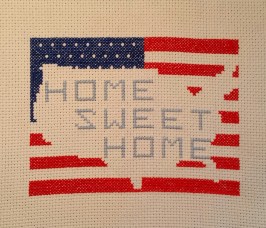
My blog is just my opinions.  When I write posts, often I walk away not sure I expressed what I really intended to say.  Storytelling isn’t my strong suit.  In fact, in most things in my life, I don’t have a great deal of talent.  That’s the truth.  I love needlework, but I’m not a “natural” at it and I don’t produce any heirloom-quality pieces.  Most of what I stitch are small or medium, not highly complicated patterns and I try to keep the back of my work as neat as the front.  My writing is much the same… a great love of writing, but not nearly the skills and talent, that I wish I had.  With just about everything I have done in my life, I had to practice… a lot, to become even halfway decent at it.  So, I stitch things that I like, even small, simple things, like this, that I want to turn into a small quilted wall-hanging for in my I love America room:

wp-1490373121466.jpg

Being willing to listen, with not only an open mind, but an open heart matters.  Often, not only messages come in surprising ways (like via a needlework video), sometimes they are delivered by highly unlikely messengers, like Mary Rose, sitting in her  “stitchblisscorner” chatting about needlework.


Here’s a link to a 2015 news story about Violette Szabo’s medals:

http://www.telegraph.co.uk/news/uknews/11755734/WWII-heroine-Violette-Szabos-George-Cross-fetches-260k.html

1 Comment

Filed under Culture Wars, Food for Thought, General Interest, Inspirations, Military, Things That Matter

A repost of a blog post from June 4, 2013:


Military leadership 101: Set the standard


Politicizing the military chain of command continued full-throttle with today’s Senate Armed Forces Committee grilling of the Joint Chiefs of Staff over the recent spate of high-profile sexual assault cases.  (Reuters report here).  The most idiotic comment came from Senator Kristen Gillibrand, from New York, who stated, ““Not every commander can distinguish between a slap on the ass and rape.”   The political solution that Gillibrand proposes adds a layer of bureaucracy between commanders and their troops – a special third-party entity to handle sexual harassment and sexual assault issues.  This will further erode trust between soldiers and their chain of command.  This smells like one more effort to turn the military into a politicized social engineering project of the left-wing politicos.  

As a female in the Army decades ago (circa 1980), I was sent to a Pershing missile unit, as I’ve mentioned before.  My battalion had less than 100 women and around 1,ooo men.  The Army back then had a pretty bad drug problem in Europe too, so things were a little rough.  Since this in my blog, I’m going to speak the truth.  I love the Army and I learned so many important lessons that have carried me through life and truly taught me how to face challenges head-on.  The integration of women into the military rates as a mixed bag of results.  One of my sisters completed a very successful career in the Air Force and she never experienced anything remotely what I did when I arrived to my Pershing unit.  Each service grappled with how to integrate women into the ranks amidst a great deal of politicized decision-making , where actual military excellence has always taken a backseat to the feminist-driven objectives.   Many women do excel in the military and certainly our military benefits from having as many of our best and brightest young people serving in uniform, so I’m not against women in the military.  What I’m going to say, is my opinion, based on my own personal experiences and observations – not some poll or what someone else said.  I’m going to speak about the real life problems that persist by integration being about politics, not what’s best for the mission or the soldiers.  It’s the real life proverbial elephant in the middle of the room that no male soldier dare speak about

In an earlier post I sort of tongue-in-cheek referred to my experiences in a battalion with so many men and so few women as the best diversionary tactics training in the world and you know what, it really was!  The minute I arrived at my battery, men started swarming around me and I guess the most accurate description would be, they were talking a lot of shit.  Yes, men talk a lot of shit, that’s a fact.  A young man grabbed my arm and I grabbed him by his shirt and slammed him against the wall and told him, “Don’t touch me!”   The other guys started laughing and talking more shit, but not a single one of them ever touched me again and the one who did grab my arm became a friend.  A female sergeant walked me down the sidewalk, past the next battery and on to the end of the parade field (those German kasernes usually have central parade field with the barracks arranged around the perimeter) .  The men were hanging out of the windows screaming vulgar things at me and the female sergeant told me not to look up and to just keep walking.  We went and retrieved my TA50 (field gear) and then she marched me back to my battery.  I was very scared my first few weeks there.

I have always felt thankful I was assigned to a battery with a good battery commander and an outstanding first sergeant.  My first sergeant (in the Army he’s called Top) was a Special Forces Vietnam vet, who taught me how to be a soldier.  The first time I met him, I was standing in front of his desk and he asked me where I was from and he looked me up and down and said, “Young lady, you don’t belong here!”  He was at a loss with how to deal with women, but he assigned us tasks, just like the men, and one thing I learned very quickly with him was if you worked hard and did what you were supposed to, he made sure to praise your efforts.  After several months there, some commander decided they should have a female M60 gunner to impress the NATO evaluators who observed many of our field training exercises.  Top picked me to be a machine gunner.  And the morning he told me that  I was going to become a machine gunner, this cocky infantry sergeant (Mr Hotshot 82nd paratrooper) said, “Top, girls can’t be machine gunners!”  Top told him, “Sergeant, you’re going to train her!”  So, I became a machine gunner and that sergeant took me to the range and as many times as I said, “I can’t do this” and I told him, “I’m scared of guns!”  He told me, “the mind controls the body, the body does not control the mind!”  Well, I learned.  Top made sure I learned a lot of other stuff when we went to the field too and to this day, I rank him as one of a handful of men whom I respect the most.  That cocky sergeant later became my husband.

Now, what kind of stuff happens when you’ve got so few young women and so many men – lots of drama and the men would make comments about why most of these women were pregnant and the rest were lesbians, totally oblivious to their roles in events.  Here’s another thing that seems to be part of the male mindset – they divide women into categories and treat them accordingly.  I behaved like a lady and was treated respectfully.  Once a few men determined I was a “nice little country girl”,  they insured other men treated me respectfully.  Men do some sort of internal policing from what I observed.  A typical occurrence would be some man would say something vulgar to me and other men would jump in and tell him that he couldn’t talk to me like that.  I quickly had many men “protecting” me and I felt safe almost anywhere on post.   I observed that many young women arrived there and went to the club and got into bad situations quickly, because men perceived them to be sluts.  Men really do divide women into groups.   One friend of mine was a young woman, who arrived at the same time I did, and she got involved in a few abusive relationships with men and after several months, she joined what I referred to as the “lesbian alliance” – it sure seemed more like a safe sex group from my viewpoint than it seemed to be about some heartfelt “sexual orientation”.  I asked this young woman why she decided to become a lesbian and she told me about her bad experiences with men and how this was safe sex and she didn’t have to worry about being beat up.

Army experiences can vary even in the same battalion and the biggest difference is in the quality of your chain of command.  I felt very fortunate to be in a battery with good order and discipline.  The friend mentioned in the previous paragraph ended up in a battery where there seemed to be little order or discipline and we had a couple of batteries like that in our battalion – in fact, I dreaded even walking into those batteries in broad daylight and going to the orderly room for official  business.  I sure wouldn’t have walked in there after duty hours.  I had another female friend who lived in a battery where the standards weren’t like in my battery.  Top had the female soldiers on the first floor with a female CQ at our end of the hallway and there was a male CQ down by the orderly room.  I felt safe in my room.  Now, this female friend, her first sergeant stuck the women on the top floor with only an unlocked door and a female CQ sitting there.  I walked up to her room only one time by myself and after that I always had a male friend with me.  You don’t ever want to get cornered on a stairwell.   My female friend who lived there was barely 5 feet tall and I bet she didn’t even weigh 100 lbs and she had to walk up that stairwell several times a day and sleep knowing only one female soldier was guarding her from a battery of men (many who used drugs and got drunk frequently).  As an aside, most of the females I met were from blue-collar or below backgrounds.  They weren’t the Hillary Clinton “experts” on women’s issues, but their very personal safety was impacted by these feminist harpies, who continue to push their idiotic feminist agenda on the military.

We had an old school battalion commander and since my public affairs job had me in close contact with the command group, I got to know the entire command group well.  My battalion commander took me along with him for many German/American events and he treated his driver and me fantastic.  He spoke fluent German,  could explain German history as well as he could military history and I loved listening to him explain things.  I had a battalion executive officer, who was a whiz at explaining how Pershing missiles actually worked and he could explain our entire nuclear posture in simple terms, where it all made sense.  I liked talking to him too.  My battalion commander nicknamed me, Fräulein Wunderbar, and he hadn’t quite grasped the female soldier thing.  He always stood up when I walked in his office and one time he had some young officers in there and he told them, “you stand up when a lady enters the room!”.  He made one of them give me his seat.  One time I had to travel with him to a Combat Alert Site, where the firing battery had been there a long time.  He had his driver stop at a nearby village and he bought us dinner in a nice German guesthouse.  When we were ready to leave he handed me over to a German lady and he told me that I was staying in this German guesthouse for the night and he would have his driver pick me up in the morning.  I told him I would be fine at the CAS site and he said, “I wouldn’t dream of having you stay there, those men have been out there for 3 months!”  He treated me like he would treat his daughter.  However, the gap in this is each of those firing batteries had a handful or so of female soldiers, so one can only imagine how they fared.  I can say that I never saw any female soldiers who were physically strong enough to be a Pershing missile crewman, but the Army had them.

I learned to handle a machine gun, but was I strong enough, if I had to pick up that machine gun and move quickly with it – hell, no!.  Yet, I could max the female PT test.  Therein lies the main rub with all this integration hoopla – the feminist harpies in political circles want women in every job in the military, yet they possess not a lick of understanding about these jobs or about unit cohesion, or about how we fight or how to win wars.  All they care about is their lame feminist agenda and waxing on about smashing glass ceilings.  There are females in the military like this too – totally centered on being the “first female” this or that – with no regard for the big picture – how their feminist agenda affects the whole team.  No one ever speaks honestly about the problems of women serving in positions where there are two different sets of physical standards for the same job, yet everyone has to pretend there aren’t.  No male commander can mention how pregnancy in actual deployments creates a gap in mission performance, nor can he impose any sensible policies for fear of the feminist harpies who monitor women in the military issues.  (ABC news story of one such attempt)

When we went on field training exercises, I spent many hours being a perimeter guard and I slept in a two-man tent with my machine gun partner, who luckily for me was a young man whom I could trust and who never said a single inappropriate comment to me.   So, when he was sleeping, I was on guard duty and the thing these feminist harpies fail to realize is their idiotic decisions could cause someone’s death in real war.  When we went to the field they used the few infantry soldiers we had to play the opposing force.  One young infantry sergeant would toss a stone near my guard position at night and whisper my name (he always approached from in front of my position).  He would come sit a few minutes and talk, then he’d head back to be the opposing force.  Now, that cocky 82nd sergeant, he’d approach my guard position from behind me, which meant he already had breached our perimeter.  He would often whisper my name in the dark too and then he would come over and he always checked that machine gun first to make sure I had it set up properly, then he asked me if I remembered this and that and after that he would sit a few minutes and talk.  He would then say, “Okay, back to fighting the war.” and he’d head back into the dark.    I always heard the young infantry sergeant long before he tossed a stone, but that 82nd sergeant, well most of the time I didn’t hear him until he whispered my name and by then he was close enough to take me out.  I would sit there in the dark after he left, telling myself, “I jeopardized our mission again!”  And I would try harder, but I thought about if we were at war against the Soviets – any Soviet infantryman could have killed me in a  heartbeat if it came to one on one fighting and I would think about my partner sleeping a few feet away and his life would have been at risk too.  I always knew that no matter how much I trained, the physical advantage was on the man’s side.  Smart armies should want the strongest men to be infantry soldiers – they best fit the mission.

The answer to the sexual assault and rape problems isn’t to get Congress involved or to have more sensitivity training.  The solution is to train better leaders in the ranks – we need to get back to basics and away from all this politicized claptrap and turning the military into a political correctness experiment.  Back to good order and discipline, back to treating soldiers fairly and consistently, back to focusing on setting high standards.  And most of all we need to decide all missions based on what best fits the mission ( in some cases that will mean men perform those missions) !

And here’s the truth about women and men, we need to get back to teaching them to be ladies and gentlemen, especially in the officer ranks.  Teaching respect at every level in the military will set the standard, so that every soldier will have confidence in the chain of command again.

Leave a comment

Filed under Civility, General Interest, Military, Politics