Thoughts after the storm

Greetings from southeast GA.

It’s 61 degrees Fahrenheit here and we’re supposed to be looking at the freezing weather in the rearview mirror now, so I’m going to do a bit of my own personal “lessons learned.” Although I didn’t face any cold-related problems, I did worry about family in other parts of the country. Some have been very sick. Some don’t really worry much about emergency preparedness and this morning I’ve been browsing cold weather car emergency items to send to granddaughters who live in IN, who have cars and drive.

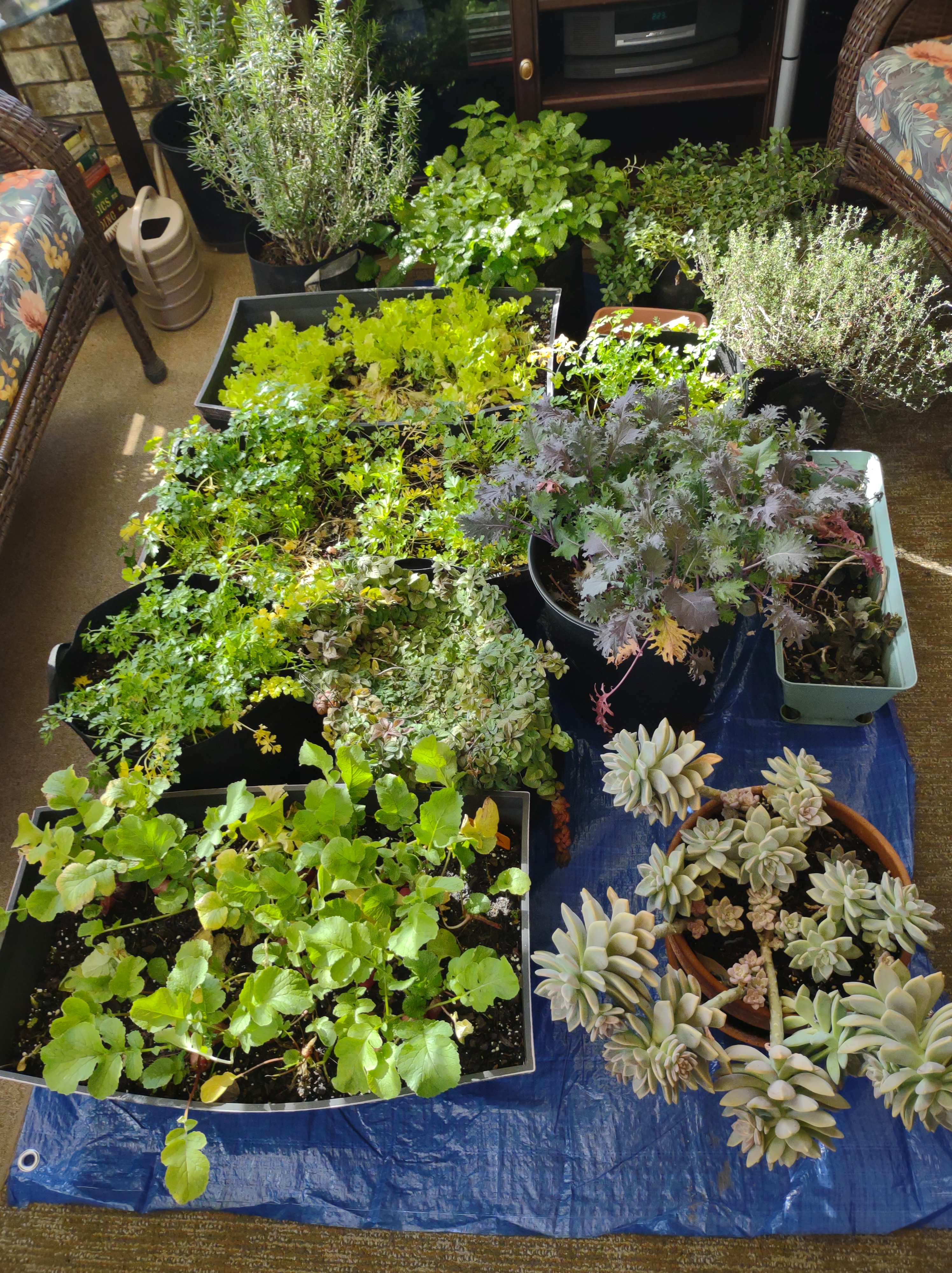
I moved a few plants from outside into my sun room before the storm, pictured above and I have some plants on my front porch that I’ve covered with a sheet (some have some frost damage and some seem fine).

I live in a home in a residential area in southeast GA, that was built in 1994 and we bought it in 1994. While generally I have liked having electric heat, when bad weather happens and now with all the warnings in America about potential grid failures or rolling blackouts, I have some concerns.

There’s a fireplace in my living room that I do not use in the winter, because most years it’s not really cold enough here to use a fireplace regularly and the other issue is my home’s layout is not conducive for a fireplace to be helpful as regular heating. The living room gets nice and toasty, but with that fireplace heat radiating down the hallway, where the thermostat is located, the electric heat doesn’t kick on and the bedrooms and bathrooms become iceboxes. I also choose not to have a wood pile, because it would just be a termite magnet here, considering I don’t use my fireplace. So, I have several boxes of fire logs in my garage, in case of emergency. With this storm I purchased a Big Buddy propane heater to have too. I didn’t need to use either during this deep freeze, because my power did not go out. However, I did run a small portable electric heater in my bathroom to warm it up more before taking showers. Like, I said, no real drama or struggles at my house.

I have a little butane stove to use to heat food and water, in case of emergency, plus a gas grill on my patio and I have a small charcoal grill and bags of charcoal in my garage. I’ve got food and water stocked too and blankets galore. I wasn’t worrying about freezing to death in my home, but I did think about some other things that I should do to be better prepared next time – things I’ve been putting off.

One thing I did before this storm was check the insulation on my AC/heat condenser outside and the outside faucets. I replaced the insulation on my condenser, because it was old and damaged. I bought outdoor faucet covers at Lowe’s and put them on. In 2018, we had a little snow and some unusual freezing temps here too and one morning my pipes were frozen. I hadn’t left a little stream of water running inside, but I learned my lesson. Luckily, I didn’t have any pipes burst, I had plenty of bottled water and the power was on. If we hadn’t had plenty of bottled water, the situation would have been a real problem. Stores here close at the first hint of bad weather and bottled water sells out before storms. I would have had to go to neighbors and ask for water, because it took almost a whole day for the pipes to thaw.

However, I waited from 2018 until weather forecasts in 2022, before a major storm, to purchase outdoor faucet covers, that cost around $4 each. I’ve got some other emergency preparedness things I want to do and instead of procrastinating, I need to get moving and take care of them.

I’m used to family making fun of me and my emergency preparedness efforts, because my husband and kids used to do that before storms, when I would check flashlight batteries and get them out to have ready. They all used those flashlights when the power did go out. Now, our cell phones have flashlights, which is handy, but I still have flashlights and emergency lanterns.

There are some things I want to do to be better prepared, but I have been thinking about family/friends who make fun of “preppers” and also a few things I saw online. With the people who make fun of “preppers” and don’t do a single thing to be prepared themselves, well, all I can say is a “Doomsday prepper” likely has plenty of food, water, a way to keep their home warm and medical supplies, so that even if illness left them “stranded” and unable to venture out – they would have the basics to manage.

I want to try to say this without picking on anyone or being too critical, but here’s the thing – too many people (I’ve been guilty of this too) procrastinate too much. I saw a very nice guy on YT (in the Deep South) talking about their power going off and using a fireplace, but he mentioned tearing apart wood pallets the day before to have for firewood. It’s good he did that, but the day before is cutting it close and I can understand not keeping a wood pile down here, because I don’t keep a wood pile either. What’s way worse is people who live in areas of the country that get snow and freezing weather every winter, yet don’t bother with being prepared for emergency power outages or other winter weather emergencies.

With the economy predicted to worsen in 2023, getting personal finances in order should be on all of our to-do lists. Here’s another procrastination story. I thought about eliminating personal debt for years, but my husband and I didn’t do it. When he was placed on hospice care in January 2020, I was scared and I decided to pay off all of our debt, besides the mortgage. Once I committed to that, it took me a little over a year to pay off all the debt and then I debated for months about paying off the house completely after my husband passed away. I paid it off and I’m glad that I did. I’ve thought many times that we should have done that years ago. How you go about getting your finances in order may be different than how other people do it, but stopping the excuse-making and rationalizations for why you haven’t done it is the first big hurdle.

A lot of times we make up excuses for ourselves to fall back on for why we haven’t made the changes we know we should have made long ago. I’ve been guilty of this so many times myself and I’m trying to just focus on getting started and doing things rather than making up excuses for why I haven’t done a single thing yet or worrying about being called a crazy prepper. The people who do absolutely nothing to get their finances in order or take seriously preparing before a major storm are assuming someone else will come rescue them if there’s an emergency. During hurricane Ian in FL this year and winter storm Elliott this past week, the truth is in a lot of the hardest hit areas, emergency responders couldn’t respond in the midst of the storm. They can’t come help you.

We all have a responsibility to our families and ourselves to be better prepared rather than being lazy and expecting someone else to rescue us. Responsibility – now there’s a word that seems antiquated these days…

Leave a comment

Filed under Emergency Preparedness, General Interest

Would you take a stranger into your home?

Leave a comment

Filed under General Interest

Merry Christmas!

Image courtesy of https://discover.hubpages.com/holidays/vintagechristmasimages

Leave a comment

Filed under General Interest

Some cold weather survival info

I found this video by The Provident Prepper YouTube channel very interesting and worthwhile:

Leave a comment

Filed under Emergency Preparedness, General Interest

Figuring out the “there” you want to get to.

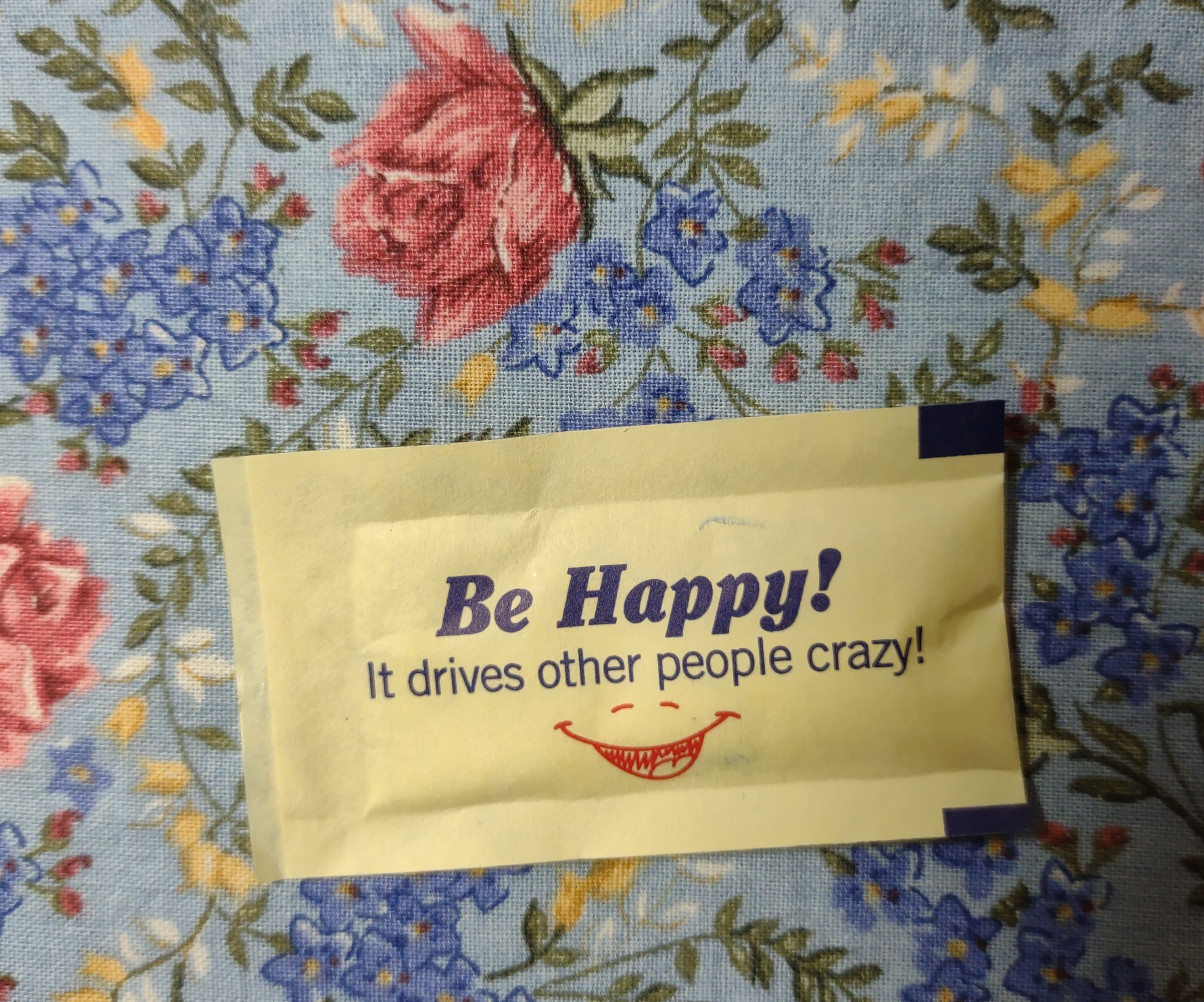
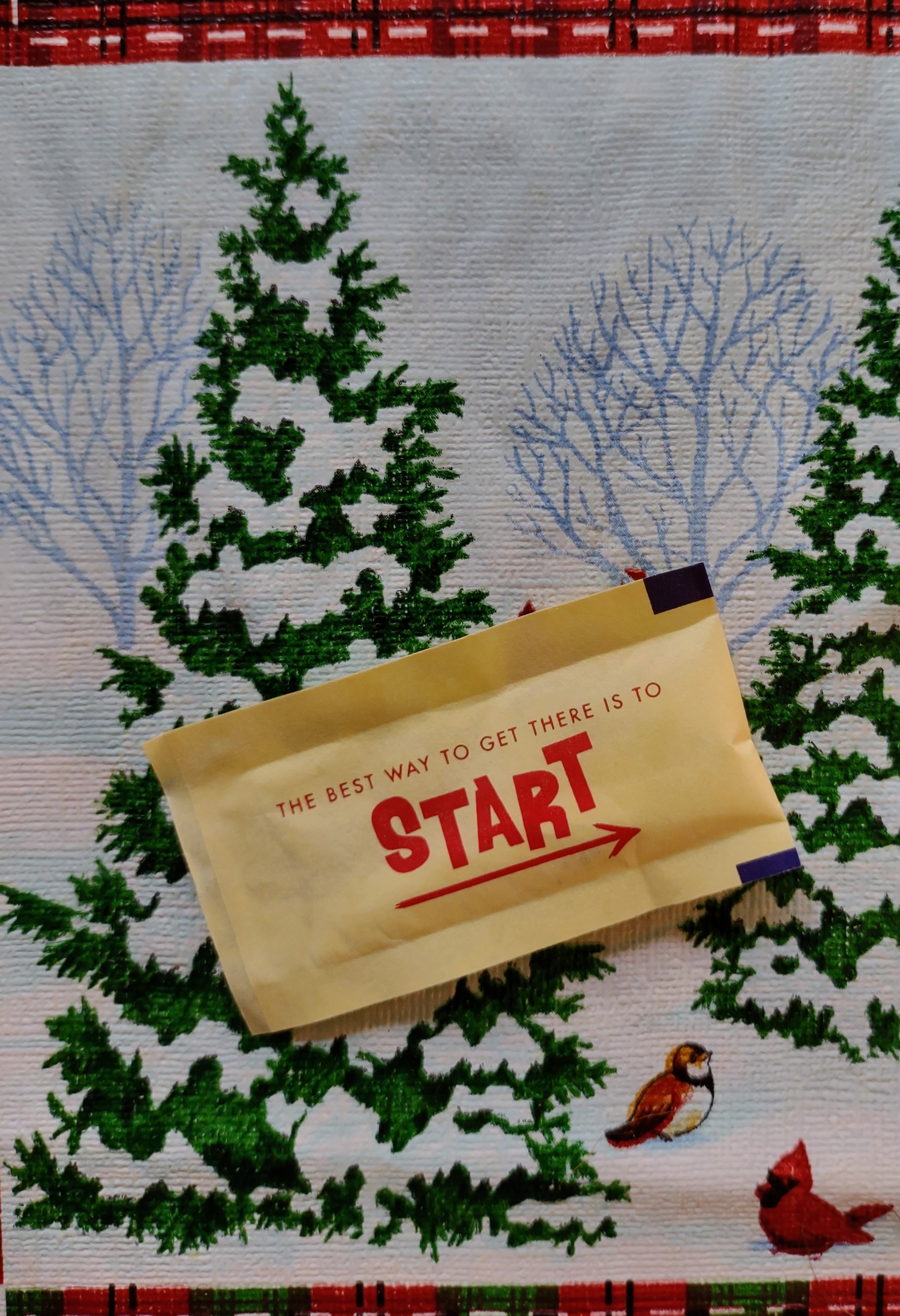
I love sayings and quotes, especially random ones that I find in packaging, like inside Chines fortune cookies. I didn’t expect sayings on Splenda packets though, but lo and behold this 400-count box of Splenda packets comes with sayings.

People seem to fight about everything online and since I have my own strong opinions about many things too – I’ve been guilty of kicking up a little bit of controversy a few times too. However, I’m trying to avoid that, but yes, I’m aware I’m a contrarian by nature, lol.

The above Splenda packet came in a 400-count box that was given to me. In fact, I was gifted two 400-count boxes of Splenda packets that were given to me by my son’s friend, who had received them by mistake in a Walmart grocery pick-up order. She hadn’t ordered them and when she tried to return them to the store, they told her they don’t take returns on pick-up orders. These boxes are over $14 each, so that store lost almost $30 on that employee error, so it’s a crazy policy, I think.

With my using a Splenda packet saying, online some people would automatically want to start focusing on their views on Splenda being an unhealthy sweetener and why I shouldn’t use it, while I was merely amused by the sayings on these packets. And yes, I am using Splenda packets in my hot tea and oatmeal, because it doesn’t elevate my blood sugar like sugar does. I also use stevia and I’ve heard monkfruit is a good sugar alternative too, but it’s expensive and I haven’t tried it yet. I’m open to trying alternative sweeteners, but I also don’t get invested in all the health food drama in America and all the word games that come with the marketing of “healthy” stuff. I found this saying amusing, but let’s be honest you’ve got to define “there” in journeys or you’ll probably start down some wrong paths and have to make a lot of U-turns. Words can be tricky and the emotions we invest in words even trickier.

Most people around the world don’t have access to goods like we do in America or the myriad of consumer goods and widespread availability of food that we still have. And yes, there are growing shortage issues and inflation here that are dramatically impacting many American homes, but by and large, we still have way more that is available than most parts of the world have ever had. Plus if you live in constant dire financial straits, well, most often in America those situations are due to bad personal decisions, not because of some unexpected event or emergency. Sorry, that’s the truth. Once you get to the truth about people’s financial decisions, especially things like debt to income ratio and looking closely at personal spending habits, often there are things like cigarettes, alcohol, junk food, fast food, lottery tickets, even junk items from dollar stores, etc. that give a clearer picture of personal finances. I’m not trying to bash any particular person or group of people, all I’m saying is most household budgets contain some choices that indicate there were other, more economical, paths to take. The figuring out where you are matters before you decide on the “there” you want to go. That’s where I prefer to start – thinking about a plan of some sort.

While there really are some disturbing major crises unfolding around the world that are likely to impact everyone, including all of us in America, like everything else the impacts are likely to vary widely in severity, depending what country you live in and even regionally or based on personal lifestyle choices and events. For instance the other day I bought an 18-count carton of large eggs at the grocery store for $6.38 and that was definitely sticker shock for me, but I decided to buy the carton, because I want to make some deviled eggs for Christmas. I don’t use that many eggs really and I have a pack of Bob’s Red Mill egg replacer and some whole dried eggs in my food storage, so I have other options for most other egg needs. I also had the choice, of course, to not make deviled eggs. I don’t know of any alternative way to make deviled eggs without fresh whole eggs, so I paid the $6.38.

With the blog posts I’ve written about emergency preparedness, I’ve felt that while I disagree with so much of the constant stream of online preparedness hysteria and fearmongering, assuredly the people who engage in that constantly would likely insist they want to motivate people to prepare and that they’re sharing important information and not fearmongering. Despite my disagreeing with the fearmongering approach, the truth is people who have taken some steps toward getting their finances in better shape, stocking up food and supplies, learned even a few skills are way better off in a crisis than people who haven’t even thought about emergency preparedness at all. That single truth is what I’ve been thinking about with a major winter storm, replete with Arctic temperatures and high wind, forecast to impact a large section of the US later this week.

Considering it’s Christmas time, millions of Americans will likely be traveling too and it’s also likely most won’t make any preparations for winter weather emergencies. That’s been mostly what I’ve seen over the years, even when people do have advance warning of an impending emergency situation.

Fear can be a powerful motivator to prod people into action, because as my Splenda packet says: the best way to get there is to START. The problem comes in that living in constant fear only works for a short time. To stay motivated and committed to being prepared requires both a mind-set and a lifestyle change, not living in a state of fear or anxiously waiting for a SHTF event to hit. It’s not all about buying supplies on a list, but more about a way of thinking, decision-making and overall lifestyle. You can’t buy your way to developing a preparedness mind-set, but the toss side of that is even modest preparedness efforts can reap big rewards, provide you with more options, but most of all it can buy you more time to come up with more solutions in an emergency situation.

Where I live we’re expected to get some freezing temperatures and perhaps some rain, but I ran to Lowe’s to pick up a few items yesterday. I asked an employee for assistance in finding an item. I told this young man I wanted to do a few things around my house to prepare for the storm that’s headed across most of the US later this week. He said he wasn’t aware there was a big storm coming. I asked him a question about a product and he started to tell me his neighbor is sort of a crazy Doomsday prepper type guy, but knows a lot, as he explained something to me. I laughed and told him that my kids think I’m sort of a crazy Doomsday prepper too. The neighbor, who is likely to be where this young man goes for help in an emergency, was labeled with the negative pejorative “Doomsday prepper type.” The truth though is this nice young man had no clue about a major weather event that’s going to impact the US this week. I expect most Americans are like this young man and think prepping is stupid or people who try to be more prepared are weirdos.

Media is largely responsible for creating that negative stereotype of emergency preparedness, by hyping the most extreme preppers and promoting that “Doomsday prepper” labeling. In this April 2022 article, This is the surprising generation least likely to have even $1,000 in savings — and here’s what they need to do about it, it states:

“A survey of 1,000 adults from Bankrate this year revealed that 56% couldn’t pay for even a $1,000 emergency from their savings account. Meanwhile, data from the Federal Reserve showed that when faced with a hypothetical expense of $400, only about two in three adults could pay that expense using cash or its equivalent. What’s more, the Consumer Financial Protection Bureau found in 2022 that 24% of consumers have no savings at all set aside for emergencies, while 39% have less than a month of income saved for emergencies.”

According to the USDA, around 10% of Americans were food insecure at some point during 2021.

While I don’t agree with a lot the drama and hysteria I see within the online prepper community, I still think the focus should be on trying to get more unprepared people to take some steps toward being more prepared and not so much focus on the most extreme “Doomsday preppers.” I had a neighbor come to my door in the past month needing some food, which I gladly provided. I’m going to take them a food basket this week too, because there are two small children in the home. I suspect there are people all over America, especially elderly people, who might be in need of some help and that’s where I think the focus should be – not on labeling people.

Without getting into politics much, I’ve always been very conservative and several years ago, one of my adult kids was telling me that she describes me to friends as sort of a “militia-type right-winger – without the guns.” I was sort of dumbstruck and appalled by that description and I was thinking, “This is what my own child thinks of me?” Then Trump came along and I was NeverTrump really, because I believed all along he’s a phony, not conservative in the least and just playing on the fears of a lot of poor Americans, especially poor white people. Trump was a NY liberal, whose golfing buddy was Bill Clinton, so I never got on the Trump train and I guess that spared me somewhat from being cast into “The Deplorables” basket. Now the targeting has moved to labeling everyone on the right as “MAGA Republicans” and I guess just about everyone who runs afoul of the liberal political views will be cast into the MAGA Republican group of “undesirables.” Which brings me back to the “Doomsday prepper” labeling, which came about by the liberal media…

What I really believe, as my core beliefs, has nothing whatsoever to do with politics. I believe in trying to help other people and treat other people as I would like to be treated.

Yes, inflation is supposed to get worse in the coming year and more and more people are likely going to be struggling, even in America. I want to focus on helping my family, friends and others people as I can, not on politics or dividing America into hostile camps. That’s the “there” I want to get to and perhaps most of us might be on board with that as a place to START.

Leave a comment

Filed under Emergency Preparedness, Food for Thought, General Interest

ESG ain’t going away

This is going to be a post about politics – specifically ESG and I want to connect a few dots. ESG has been talked about a lot and among the right it’s sort of become like a shorthand term for “evil corporations,” but that completely misses the point. Corporations didn’t just decide to adopt ESG, which stands for environmental, social, and corporate governance out of thin air.

ESG came about out of UN initiatives. In 2004 the UN formed the UN Global Compact, so this goes back to when George W. Bush was president and the US and major US banks, investment corporations and large corporations have been on board with all of this since the beginning. None of this ESG agenda would be happening in America without the full support and prodding of the US government. This is true around the world – the UN agenda from this 2004 UN Global Compact, where the term ESG was first used, to the 2015 UN Agenda 2030, which lays out an ambitious 2030 timeline to transform the world into an environmentally, sustainable utopia, where equitable governance is universal was signed onto by almost every country in the world.

In 2004 this Global Compact report came out: Who Cares Wins: Connecting Financial Markets to a Changing World. On the title page here’s the blurb at the bottom:

“Endorsed by:
ABN Amro • Aviva • AXA Group • Banco do Brasil • Bank Sarasin • BNP Paribas • Calvert Group • CNP Assurances
Credit Suisse Group • Deutsche Bank • Goldman Sachs • Henderson Global Investors • HSBC • IFC • Innovest
The Global
Compact
ISIS Asset Management • KLP Insurance • Mitsui Sumitomo Insurance • Morgan Stanley • RCM • UBS • Westpac • World Bank Group”

This ESG effort isn’t just about “woke companies” promoting American leftist policies; it’s a global effort, endorsed by almost every country in the world – including the United States. That’s why all these silly right-wing reactionary antics about “ESG” and “woke companies” is rather pointless, in my opinion. Every major US corporation has had to get on-board with the ESG agenda, because all of the big investment firms and banks have adopted this ESG agenda – since the early 2000s.

So, let’s fast forward a few years to 2015, the year the UN adopted Agenda 2030 – here’s the link to that: https://sdgs.un.org/2030agenda.

I don’t want to ramble on a lot about my personal feelings or thoughts about ESG or Agenda 2030 or the WEF & Klaus Schwab, because my intention with this post is to draw awareness to how ESG and “woke companies” aren’t acting alone – they embarked on this, because most governments around the world are 100% behind this effort, including the United States of America, and the ones that aren’t 100% are being pressured to pay lip service to it, or face having investment and development aid being cut off.

I came across this June 2020 Forbes article, Demystifying ESG: Its History & Current Status, which provides a lot of details on why we started hearing so much about ESG since 2020 – and that’s about the acceleration effort proposed by the World Economic Forum crowd, to use the global pandemic economic turmoil as an opportunity to speed up the global transformation goals in Agenda 2030. This is what Klaus Schwab, the founder of the WEF termed – The Great Reset.

Right-wing pundit media types started blabbing about The Great Reset and ESG a lot in the past two years, but they’re so far behind at really grasping that governments around the world, including the US, the UN and major financial and investment corporations, have been laying the groundwork and implementing these policies since the early 2000s and by the time the UN adopted Agenda 2030 – in 2015 – major corporations and banks around the world were already on board completely.

People on the right getting on their high horse saying they’re going to boycott this or that company, because of ESG or “woke policies” really completely shows a lack of reality – almost everyone lives within these systems and relies on goods and services from major corporations and/or the government, which are fully invested in advancing the ESG goals. There isn’t any easy opt-out option for any of us – that’s the bottom-line.

Anyone who thinks that getting angry about something and coming up with a quick reaction – like “I’m done shopping there or there or there!” is going to deter or stop a major global effort that’s been underway for almost 20 years and backed by almost every country and major corporation in the world is delusional. Everyone will have to decide for themselves how much they’re willing to go along to get along in this situation, just like during the pandemic. I resented some of those policies too, but I also need to see my doctor and have tests done sometimes that required me to comply with rules, I didn’t agree with. I’m not judging other people for the choices they make or what they believe about the pandemic, the environmental issues or any of the so-called “woke” agenda, because frankly, there’s so much bad information in the news and social media environment that it’s a total wasteland.

I have my own thoughts on how, if things spiral out of control with the Great Reset in too many places in the world, that could propel many rapid changes to occur, but like everyone else, I don’t have a crystal ball. ESG ain’t going away – that’s the reality.

Leave a comment

Filed under General Interest, Politics, The Great Reset

Small beginnings are within reach

I started a blog post the day after Thanksgiving and despite editing and rewriting parts of it, I decided not to publish it, because it wasn’t quite expressing what I wanted to say. I became interested in becoming better prepared in 2020, mainly out of fear when my husband was placed on home hospice care and within weeks of that the pandemic craziness hit.

I’d always stocked up extra supplies and food, but I felt assuredly there were “experts” who know a lot more than I do. That’s when I started viewing YouTube prepper videos. I’d been watching homesteading videos for a long time too and that goes with my interest in learning about how people grow food and manage living off of small farms or village life around the world. When my husband and I were first married I told him my dream was to live on a small farm out in the country. We never tried farming and I likely won’t ever live on a small farm in the country, but I enjoy watching other people who have embarked on that adventure.

I’ve been watching an Azerbaijani lady cook food over open fire outside for years and even before I found that channel, I watched a grandma cook in her village in Sri Lanka. A few African village life channels popped up in my feed recently and I’ve watched a few of those too. The biggest takeaway is people do manage with a lot less, they take pride in talking about their lives and sharing native dishes. I’ve learned a lot watching these videos and there’s absolutely no drama, the people seem warm, friendly and excited to share their culture. Unlike so much of the sky-is-falling drama that permeates many of the American prepper and homesteading channels, these people living with so much less, seem more emotionally stable, calm and happy.

When I came across the William Bradford quote for Thanksgiving, the “out of small beginnings greater things have been produced” phrase stuck in my head. Bradford was a Puritan, who sailed to America on the Mayflower and became the governor of the Plymouth Colony, when the first governor, John Carver, died during the early months establishing the colony. Out of the 103 Mayflower passengers and around 30 crew on the ship, about half of them died during that 1620 voyage and first winter in America.

The Mayflower voyage went off course and the Pilgrims ended up reaching land much further north than planned, in November of 1620. They were running low on supplies and totally unprepared for the cold, hard winter there.

The first Thanksgiving was a 3-day harvest celebration in 1621. Although, those first settlers survived their first year in America, daily life was grueling, devoid of luxuries, and uncertain. Life in some parts of the world is still that way. I doubt any of the early American settlers could ever have imagined that out of their small beginnings, our United States of America would grow into a great and prosperous nation.

While we are facing some shortages now, Americans were facing all kinds of shortages, including food shortages, from the first settlers and there were years of failing crops, wheat shortages, and other shortages many times in American history, yet people couldn’t run to Costco or Walmart and try to stock up. They learned to make-do during wheat shortages with what they had and used substitutions, like barley, oats, corn to make bread.

Interestingly, while it’s easy to presume early settlers were all made of sterner stuff than people today and had some sort of unique survival skills, the truth is they were just people too. Their daily lives involved a great deal more hard labor and lack of physical comforts, so from an early age daily life required self-discipline, following a daily routine, and a sense of commitment. The Puritans had already moved from England to the Netherlands to avoid religious persecution, before embarking on the Mayflower voyage. Daily life in England and the Netherlands in the 1600s, was a far cry from arriving in America, where they were facing an uncertain situation with the Native Americans and an inhospitable land.

We all are products of the times we live in and as times change people adapt and change too, but even back in early America, some people didn’t cope well and they had all the same human emotions we have today.

William Bradford’s wife, Dorothy, died while Bradford was on his third scouting trip on land, as the other passengers stayed on the Mayflower, awaiting their return. She fell overboard and drowned while the Mayflower was moored in the harbor. Some historians question whether she committed suicide. There were passengers dying all around her and they had left their three-year old son behind in Amsterdam, with Dorothy’s parents.

Nathaniel Philbrick, in his book, Mayflower, wrote: “We think of the Pilgrims as resilient adventurers upheld by unwavering religious faith, but they were also human beings in the middle of what was, and continues to be, one of the most difficult emotional challenges a person can face: immigration and exile. Less than a year later, another group of English settlers arrived in Provincetown Harbor and were so overwhelmed by this “naked and barren place” that they convinced themselves that the Pilgrims must all be dead. In fear of being forsaken by the ship’s captain, the panicked settlers began to strip the sails from the yards “lest the ship should get away and leave them.” (pages 76-77)

Most of us adjust and learn as we face challenges, just as the Pilgrims did. Some people, even back then, fared better than others, but none of the first settlers in America, nor the Native Americans, already here, lived an easy life filled with comfort items and luxuries that we take for granted. However, we can all, little by little, choose to learn new skills and face new challenges with a positive spirit and small beginnings that produce greater things are still attainable, no matter what the latest shortage being hyped or online drama.

I watched a video the other day where the couple grew a dry corn variety this year and they ground some up and made cornbread. I found that very interesting. I bought a cookbook, Country Beans, earlier this year (used for under $6 on amazon), which explains a multitude of ways to use dry beans, peas and lentils, including making flour out of them. Each little bit of information I acquire and each little experiment learning new techniques and ways to use food, or even my small gardening effort, feels like time better spent than getting worked up about world crises or the latest hot topic flitting across social media.

We can all assuredly embark on a few small beginnings, just looking through our homes and pantries and trying to find new ways to use the things we already have. Unlike the early settlers we have access to information almost instantly. There are even apps available that can identify wild plants and trees with the snap of a photo on your phone. There is more information on ways to use almost any food than any of us can ever possibly use. Truly, we still live in a land of abundance here in America and I am thankful for that every day.

Leave a comment

Filed under Food for Thought, General Interest

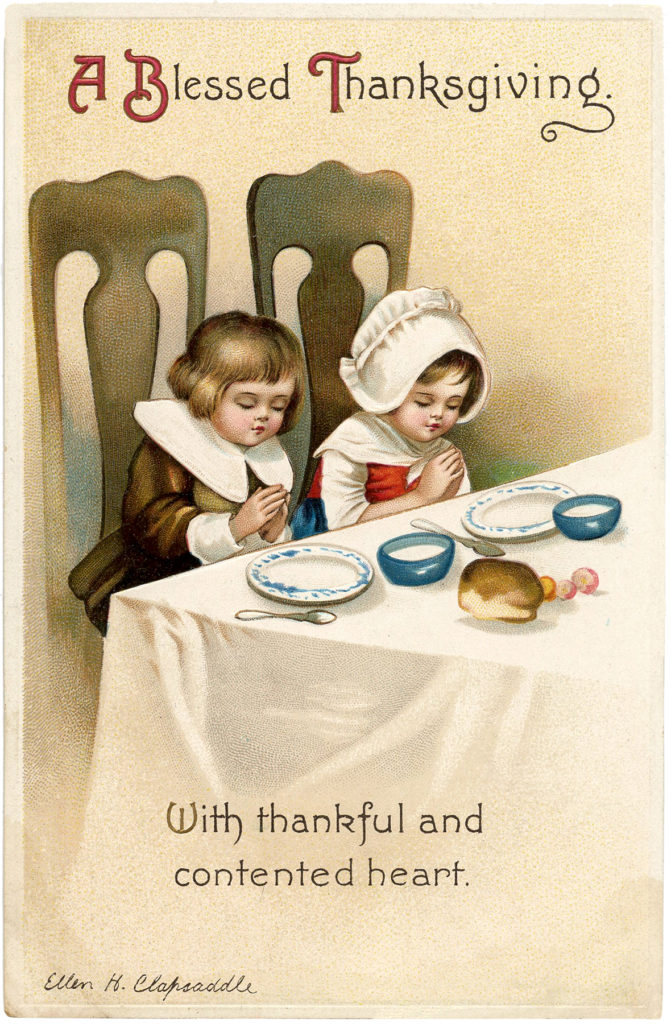
Happy Thanksgiving!

“Thus out of small beginnings greater things have been produced by His hand that made all things of nothing, and gives being to all things that are; and, as one small candle may light a thousand, so the light here kindled hath shone unto many…”

https://reasonsforhopejesus.com/a-thanksgiving-day-meditation/

Image from: https://thegraphicsfairy.com/wp-content/uploads/2019/10/Thanksgiving-Grace-Image-GraphicsFairy.jpg

The past couple years the world has seemed turned upside down at times. As Americans celebrate Thanksgiving Day this year, we have an opportunity to join with family and friends, share good food, old stories and take some time to express gratitude for all the blessings in our lives.

It’s very easy in the midst of all the bad news swirling all about us every day to lose sight of the many good things.

Today’s a good day to try to leave the rancorous politics and the doom and gloom economic news aside. Smile, laugh, share a bit of hope. We can all try to be a small candle for those around us.

Have a safe and very Happy Thanksgiving!

Leave a comment

Filed under General Interest

Don’t discount the weeds

Since I’ve been rambling on about politics too much again, it’s time to get away from that. I stopped watching TV almost completely several years ago and I’ve never gotten into the streaming services. Instead, I began watching more YouTube videos. It’s very odd that I made this transition. I thought reality TV was total garbage from its inception and YouTube is filled with videos made by content-creators, mostly with no professional experience at media, but I’ve found that I enjoy the amateurish quality (reality) with all sorts of videos, including many crafting, needlework, frugal-living, and homesteading channels.

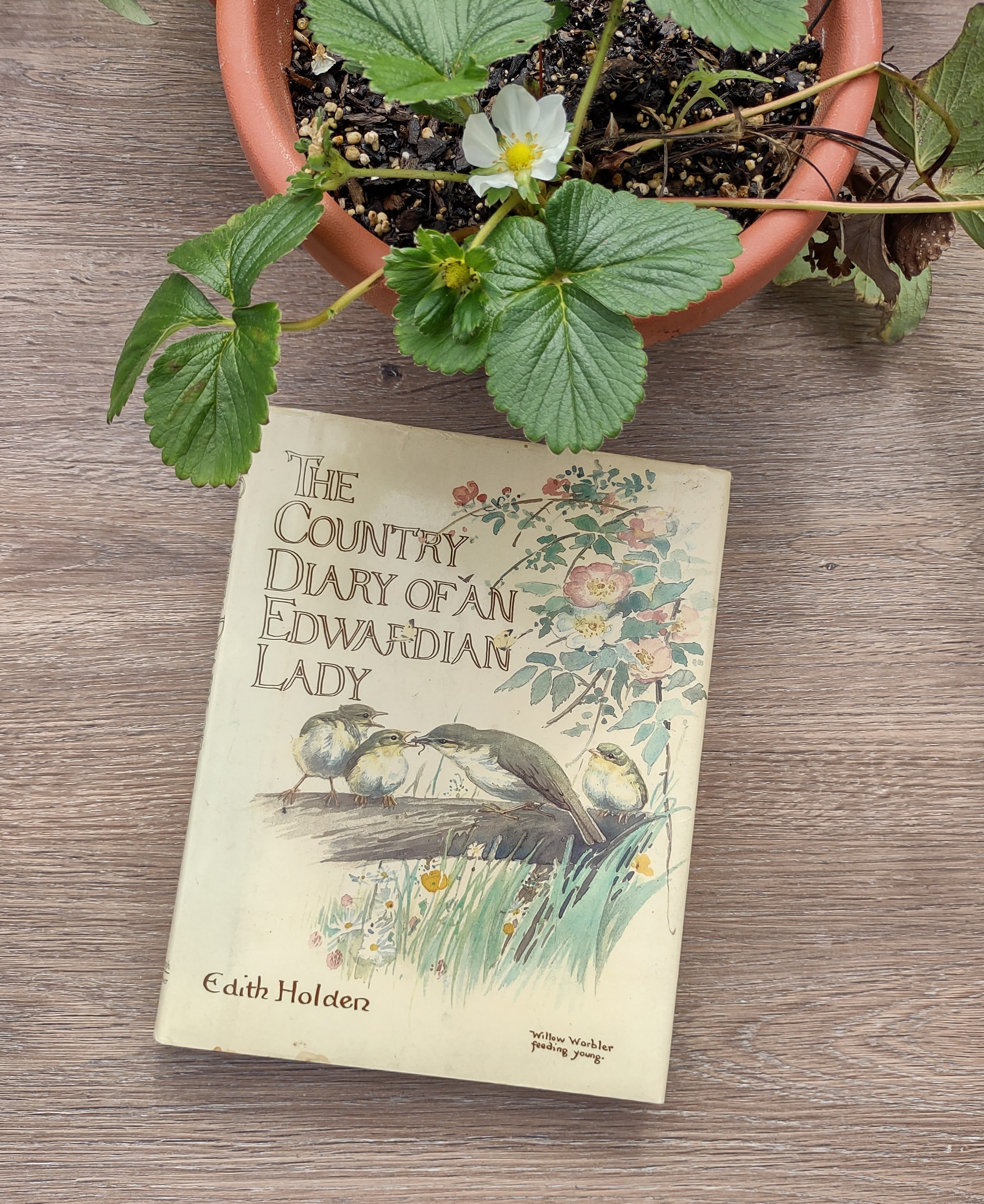
Last week, while watching a homesteading video, the husband narrated most of the video, but for a few minutes the wife discussed her homeschooling ideas and she mentioned a nature journaling project she’s planned and that her daughter was excited about. She held up the book pictured above. Her few minutes uplifted me and made me feel a flash of hopefulness for the future. Here was a young mother, homeschooling her daughter and putting together a nature journaling adventure. I found she had been captivated by Edith Holden’s nature journal for a long time, just like me. I found another video by this young mother from 5 years ago, where she talked about starting a nature journal. She showed a flower press her husband made for her. It’s reassuring to see young people, who just set out and try to learn new skills and make things, using simple supplies or things they have around the house.

About 5 years ago, I bought that very same Edith Holden book, when I was learning how to make junk journals. I saw numerous videos where pages of this Edith Holden book were used in junk journals, so I bought this book on amazon – used, in very good condition, for $3. Junk journaling is a free-spirited move away from the commercialized scrapbooking of a few decades ago, where you can make your own books and journals using all sorts of materials, including, old books, junk papers, pages from books, old greeting cards, scrapbook paper, and even envelopes. I discovered junk journaling on YouTube and it opened the door to another crafting adventure for me. I’ve made numerous junk journals, but haven’t had the heart to tear any pages out of my copy. I prefer to draw inspiration from and cherish the entire book.

Edith Holden was an English artist and art teacher at a girl’s school, who also worked as an illustrator for some nature publications and children’s books, according to her Wikipedia bio. This book contains absolutely beautiful sketches and watercolors of plants and animals, along with nature notes, poetry and quotes. In 1906, she created this diary as a model for her students. She died in 1920, but this diary, left to family, wasn’t’ published until 1977.

While many people associate nature-journaling and watercolor painting as some hobby of British upper-class ladies, drawing and sketching were actually very important skills before photography existed. People couldn’t just pull out a cell-phone and snap a photo or google things for information.

The British military also taught military officers watercolor painting, as part of keeping ship’s records of where they travelled. The entire idea of drawing pictures of nature was very important in early America too, as colonists set out to learn about this new land.

From 1804-1806, Lewis and Clark were sent by President Thomas Jefferson to explore the new land America acquired after the Louisiana Purchase. They did not have an artist on their expedition, so between the two men, they filled 18 small notebooks with details, maps they created, and illustrations they drew. Neither was a trained artist. Here’s a link where you can read their journals and look at their maps and illustrations. The Lewis and Clark Expedition is one of the most fascinating adventure stories in American history. President Jefferson commissioned the Corps of Discovery in 1803 and he picked Captain Meriwether Lewis to lead the expedition and William Clark, another officer, was the second in command. Lewis was an Army officer, but he had no formal education until he was 13 years old according to his Wikipedia bio. President Jefferson set about making preparations for this expedition, which included extensive training for Lewis:

“In 1803, Jefferson sent Lewis to Philadelphia to study medicinal cures under Benjamin Rush, a physician and humanitarian. He also arranged for Lewis to be further educated by Andrew Ellicott, an astronomer who instructed him in the use of the sextant and other navigational instruments.[28][29] From Benjamin Smith Barton, Lewis learned how to describe and preserve plant and animal specimens, from Robert Patterson refinements in computing latitude and longitude, while Caspar Wistar covered fossils, and the search for possible living remnants.[30][31] Lewis, however, was not ignorant of science and had demonstrated a marked capacity to learn, especially with Jefferson as his teacher. At Monticello, Jefferson possessed an enormous library on the subject of the geography of the North American continent, and Lewis had full access to it. He spent time consulting maps and books and conferring with Jefferson.[32]

Several years ago there was a hobby that took off called “geocaching,” but the real-deal caching was a matter of life and death, not fun and games like geocaching. During the Lewis and Clark expedition “caching pits” were dug and used to store supplies and it required skilled trackers to relocate those caches in the uncharted wilderness. Truly, the Lewis and Clark journals are something every prepper should take a look at, because it’s amazing the things you can learn from their grueling journey.

Ulysses S. Grant, the famous Civil War general and US president, was also an artist. He began watercolor painting as a young man and studied art while a cadet at West Point. Grant was known for being a rough and tough general, but he was also an accomplished watercolor artist

My road to actually making junk journals started as a child, when I created scrapbooks and journals, often cutting pictures out of old magazines, pressing flowers, and using found items around my home. Back then, I didn’t think about needing certain supplies or having to follow certain rules. Like most kids, I just set off and explored new things. Some worked, some didn’t, but I felt a sense of joy and enthusiasm that can fade as you grow older and start thinking you need to use certain supplies when doing things. Scrapbooking became a popular craft a few decades ago, with mountains of “must-have” supplies being touted and sold. I have a lot of those supplies still, but I didn’t enjoy that structured way of scrapbooking

While battling cancer in 2003-2004, I purchased several books on making handmade books and it made me feel hopeful, but I didn’t feel confident enough to start making my own handmade books. That inspiration came after coming across a junk journaling video on YouTube, then realizing there was an entire junk journaling community there. As I watched more channels, I realized some were skilled artists, others brand new crafters, but what I loved was absorbing all these ideas and beginning to feel, “Well, I could do that too!” That’s what inspiration is – when you move from letting doubts hold you back, to actually taking those first steps setting out on a new path. Inspiration can come in many forms, from faith, from the beauty of nature, from poetry, books, art, but it can also come from ordinary people cheerfully showing how they’re doing something that you’ve thought about, but weren’t sure how to go about it.

The junk journal on the right remains one of my favorite junk journals, even though neither is some stunning journal or remotely art. I made these from old books, using old calendar pages as the pictures on the covers. Inside each book I added all sorts of junk, from old cards and post cards, to even labels from packages:

Amidst all the media noise our modern life is filled with, we can choose to work at unplugging a bit and really looking at the world around us.

Rather than focusing on all the bad things happening, even small things, like enjoying a beautiful sunset or spending a few minutes watching birds, or even admiring some small wildflowers growing in the crack of a sidewalk, might give you a moment’s peace or hope. You might not have any interest in nature journaling, but we can all benefit from the gifts of nature, that don’t cost a cent.

A.A. Milne, the English author of the Winnie-the-Poo books said, “Weeds are flowers, too, once you get to know them.” Beauty can be found almost anywhere, if you open your eyes and look for it.

Have a nice day!

Leave a comment

Filed under Uncategorized

Who’s the real fighter – Trump or Dems?

Here are two articles worth reading about this past election inner-workings. One is from the Daily Kos, New report reveals how Democrats conned Trump into picking terrible midterm candidates and the other from the Washington Post, How Trump, infighting and flawed candidates limited Republican gains

“Democrats saw exploiting individual Republican candidates as their best shot at victory — knowing the political environment was a difficult one.

“Our theory of the case from the beginning was we assumed that this was going to be a very tough election for us,” said Christie Roberts, executive director of the Democratic Senatorial Campaign Committee. “We had to utterly discredit and disqualify our opponents.”

A former opposition researcher, Roberts had plotted the attack from early 2021, when she directed her committee to get involved, often in secretive ways, with Republican primaries across the country. In many cases, her work targeted an audience of one, Trump, who had the power to get a candidate through the primary with a simple endorsement.

The Democrats planted early stories about past criticism of Trump by former North Carolina governor Pat McCrory (R), aiming to push Trump to endorse someone less electable in the state’s Senate primary. (The successful nominee, Ted Budd, went on to win Tuesday.) They built up the idea in the press that Arizona Gov. Doug Ducey (R) might run for Senate, prompting Trump to lash out and make clear his opposition; Ducey passed on running.

They handed out other hit pieces against Ohio GOP chairwoman Jane Timken and Pennsylvania Senate contender Dave McCormick, mining their old public comments for any criticism that might raise Trump’s ire. The committee even subscribed to a service that allowed for constant monitoring of right-wing radio, so divisions could be picked up early and amplified.

It was opposition research as psychological warfare, directed at Trump’s Mar-a-Lago Club and Bedminster, N.J., golf resort. During internal meetings at the DSCC in 2021, senior strategists spoke about creating a “summer of chaos” and a “fall of fighting” in the Republican Party.”

https://www.washingtonpost.com/politics/2022/11/10/republicans-midterm-elections-trump/

The Washington Post piece also details the Republican internal battles, inside Trump’s crowd at Mar-a-logo and Congress. When I mentioned Dems efforts to label Republicans as “MAGA extremists” as part of the Dem election strategy, that was before I read this article, but anyway, here it is is from the Washington Post:

“They described how Democratic efforts — to label Republicans “MAGA extremists,” elevate concerns of a tectonic abortion ruling by the Supreme Court and highlight threats to the democratic process embraced by GOP candidates — helped blunt overwhelming frustration with inflation and growing fears about crime. Exit polls conducted by AP VoteCast found 27 percent of voters cited abortion as the most important issue for their vote, compared to 31 percent who said inflation. Eleven percent of voters said crime was the most important, exactly the same share as said gun violence.”

And btw, Dem strategists and operatives had been working on this from early 2021. None of their spin operations are new, they’ve been perfecting turning their campaign operations into high-tech information warfare for decades. I didn’t just pull my assertions about the Dem spin information warfare stuff out of thin air – I’ve been following the Dem media spin operations closely since the 90s, as I’ve said many times on my blog. It may sound extreme to most Americans, but with Democrats it’s sophisticated, high-tech information warfare that’s all about trying to manipulate and dominating the mass media (battlefield), to drive and control public opinion in America. Dems really do want to control both politics and the media in America.

I encourage you to read both articles.

Leave a comment

Filed under Uncategorized