This is a bit of a political post and then some more thoughts on dealing with people who might come asking for help. Here’s a financial interview from this morning:
More bad economic news and predictions here, so lots of people grumble about the high cost of food and gas, but they haven’t made lifestyles changes to try to position themselves better to weather a serious economic crisis.
Yesterday I saw this speech by JP Morgan Chase & Co, CEO Jamie Dimon from June 1st, where he says we’re facing an economic hurricane and we don’t know yet whether it will be a minor one or a superstorm Sandy or Andrew:
I’m here to tell you that even minor hurricanes can cause a lot of destruction and kill people, because by their nature hurricanes bring high winds, flooding and spawn tornados. In economic terms, even high inflation can wipe out many businesses or push families living with very limited means beyond being able to stay afloat.
The political question for Democrats will be whether they continue to cave to the far-left and the global zealots or some start pushing back against the green energy zealots’ war against American fossil fuel. However, at this point, it seems that any internal uprising in the Democratic Party against the far-left will be met with fierce resistance and seems unlikely to succeed.
Dangerous economic storm clouds aren’t in the distance, they’re moving in fast and I suspect President Biden and the green energy zealots aren’t likely to change course to steer America toward safer ground.
Everyone will end up having to face the reality of runaway inflation caused by soaring diesel fuel prices, shortages, and more shipping disruptions. The single best thing anyone can do, besides having extra food and water stored is to get your personal finances in order. Americans are even more financially unprepared for hard times then they are with being prepared with basic supplies for emergencies, so this will affect all of us, even people who did prepare.
I believe in being nice to people and trying to help people, but one thing I learned decades ago with doing volunteer work (trying to help people) is the people who ask for help constantly are predominantly the people who create financial chaos in their lives, don’t think ahead and live life without any goals or concerns for preparing for a rainy day.
My post about helping people the other day is how I feel. I try to help people, when I can.
Yes, I understand that people who aren’t prepared vastly outnumber people who do prepare and that means those who prepare will need to prioritize who they choose to help, how much they help and be aware of their own safety. What bothers me is sitting around wasting time dreaming up scenarios and wasting time and energy thinking about which family members or people you know will be leeches and which ones you’re not going to help. To me that energy and time could be better spent doing more to prepare and do positive things that need doing in my own home and life. I also don’t get angry at people who don’t heed my advice about preparedness. Anger gets me nowhere and it’s not going to motivate them to get busy on being more prepared or to listen to me.
I can find dozens of things that need to be done around my house every single day. I can also find dozens of things I could be working on to become better prepared and especially better organized. Worrying about who I’m going to help and what I’m going to say doesn’t require planning. I learned how to say, “No, I’m sorry I can’t help,” years ago. I’m selective with charities I donate money to. I am selective about handing out money to people collecting money for people they know who are in need. This doesn’t take planning for me – I just think about the situation and decide whether I choose to donate or not. It’s the same with people with sad luck stories – even family. I’ve got limits, just like I think most people do.
I also believe in self defense – enough said. It’s always a good idea to practice situational awareness and nowadays that requires getting your eyes unglued from electronic devices and paying attention to what’s going on around you. Years ago, as the cell phone addiction problem grew I said America could be taken over and millions of people would be totally unaware unless they saw something about it on their cell phones. Watching what’s going on around you is the single most important skill to develop, which can help you assess a situation and avoid danger. Most of this is just common sense everyday life stuff and not specific to emergency preparedness.
A skill I’ve had to work on and it’s taken me a lot more time to learn is how to be a better listener and not rush to judgment about people with problems. I’ve found many times that making small efforts to help people or encourage them often does more than lecturing people or preaching at them about what all I think they should have done or need to do now. Offering to help someone learn to do something or offering a helping hand up requires forming a relationship and trust. I’ve found that If I can find a bit of common ground, where I’m talking to someone, not down to them, it can often create a dramatic change, where we can find ways to work together.
On a brighter note, I’ve had lots of experiences where total strangers extended kindness and did nice things for me. It’s important to see goodness in the world and not focus solely on the doom and gloom – especially in very bad times. Don’t forget how to smile and find joy in life.
In the past couple weeks the belief that the food facility fires are part of some deliberate, politically-motivated effort to destroy our food supply has spread faster than, well, wildfire among the right. In the past couple days I’ve seen various people on social media proclaim it’s “eco-terrorism” and I’ve seen several mentions of some iteration of “he who controls the food supply, controls the people,” being bandied about. None of these people can give details of who exactly they believe is responsible for these fires or evidence that supports that conclusion. but they’re convinced there are just too many fires for it to be a coincidence or accidents.
The right-wing crazy spreads as fast as the left-wing Trump derangement spread. I’ve yet to see any real evidence indicating these fires were eco-terrorism or that they are all connected. A whole lot of people on the right believe Biden, Democrats and liberals pushing climate change/green policies will do anything to force Americans to comply with their agenda, so believing these fires are eco-terrorism fits perfectly with their belief that these people on the left are evil. People on the left, who went totally bonkers about Trump being akin to Hitler, were caught up in that delusional belief pattern too.
So, yes, there are plenty of people on the left who want to force Americans to comply with their green agenda and yes, many of these people put their ideological beliefs about climate change above individual rights and our liberties. Some even spout that their policies, which are crushing small businesses and even the American economy, are a small price to pay to move to their vision of green energy. However, I’ve seen no evidence linking these fires or bolstering the conclusion they’re part of some diabolical plot to destroy the food supply.
Where I do see efforts to control people is on social media – trying to control information (the endless spin information war) and efforts to silence numerous people on the right or people who did not accept the “trust the Covid science” put forth by health officials and politicians. However, here again the overreach centered on a four-year effort to silence Trump, but it also spread to include other Republican politicians and mostly people on the right, but there was also a massive effort to kill the Hunter Biden laptop story in October of 2020. Twitter and other social media platforms banned users from reposting the NY Post story on Hunter Biden’s laptop.
Distrust permeates between partisans in America, but often even between people who hold differing views on preparedness or what to stock up on. I don’t care what people stock up on, but I will keep preaching about how important it is to try to get out of debt, especially consumer debt. I also believe it’s important to stock up on hope and optimism too. I’m not going to run around calling anyone evil if they disagree with me and I prefer to assume most people are operating in good faith, even the people who I think went down a right-wing rabbit hole on this “they’re trying to destroy our food supply.”
I haven’t seen much in the way of competent strategic planning on the left – even with the Davos crowd. The policies they’re proposing and most of what Dems in America have pushed will definitely lead to worse economic woes, but if you watch how much of a mess the baby formula crisis is and how inept the response, well, it’s hard for me to believe these people are the masterminds of some grand plan to destroy the food supply via arson at food facilities. They might wreck the food supply through their total incompetence and stupid policies that don’t work, but I just don’t see them as strategically plotting arson attacks to destroy the food supply.
All of the trillions spent for COVID hand-outs and other rash spending have put us on the path to massive economic problems, then add in the war in Ukraine, sanctions on Russia, and other assorted weather problems, shortage problems, shipping problems, well, we’re heading into some trying times.
Rather than sit around doom-casting or worrying about everything from what I’m going to do if people come to my door asking for food, to worrying about America collapsing, I’m focusing on what I can do each day to positively affect my life and help my family and people I come into contact with. I’m not wasting one second worrying about what I’m going to say to a family member or friend who made some comment about me stocking up and then comes to ask for help. It’s pretty easy for me to offer help, if I can, but my help comes with telling them they need to pass it on.
True story from my trip to visit my youngest grandchild last month – my daughter thinks my level of stocking up is ridiculous and she assumes life will continue as normal. Until the federal government puts out some bulletin, I doubt she’ll believe me about the precarious economic situation.
In my usual travelling mode, I took some cash with me, to have in case. At my daughter’s house one day, the guy who does the yard at the house where they just moved into, came and mowed. My daughter came in the house and asked my son, who travelled with me, if he had cash to pay the yard guy. My son said he doesn’t carry cash. I asked her how much she needed and I told her I had it, so I gave her the cash. She said, “Who carries cash?” I said, “Everyone should carry some cash.” Perhaps they’ll think about it, but even if they don’t, I’ll help them regardless, because they’re family.
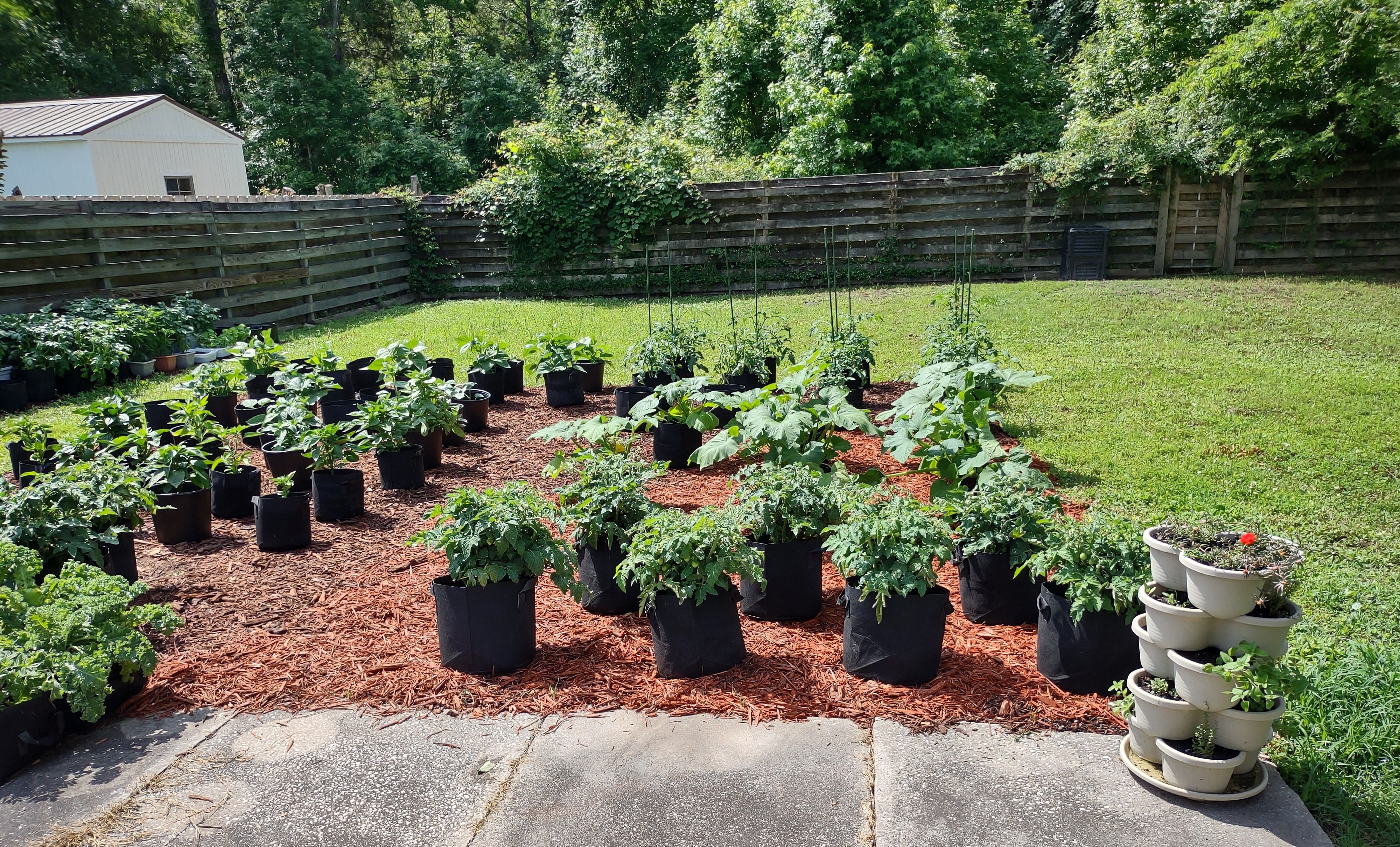
Rather than preach about growing food, I decided to attempt container gardening and it’s working for me, but I also gave 6 people plants and I offered plants to two other people, who didn’t want any. I’ll still be happy to share extra vegetables with those two, because they’re nice neighbors, who would help me out too. I am not investing any energy into getting angry at anyone – even people I totally disagree with or who hold differing political views.
With other things I’ve done to try to be more prepared, like most people, I’m a work in progress and have a lot of gaps – some from deciding what my budget allows and some from I feel totally out of my depth in knowing what’s best for me – like a generator or portable solar power. With talk of rolling black-outs being likely across the country this summer, thinking about this area of preparedness seems more pressing, so I’m trying to do some research.
I have several ways to cook food – butane burner, gas grill, charcoal grill and there’s still some little gas stove thing my husband used in the garage – plus if push comes to shove, I have a fireplace, but I sure don’t want to light that in the summertime in GA. I’ve thought about a sun oven, but the All American sun oven is expensive and I doubt I would use it much. A long time ago I watched a video on how to construct a sun oven cheaply, but I haven’t tried that.
A huge problem for me is organization and figuring out better ways to organize my food pantry, my supplies, tools, craft and sewing stuff and now more gardening stuff has become a priority. What good is buying a lot of stuff to be prepared, if during an emergency I can’t find things quickly or am digging through closets, boxes, plastic totes, and even store bags, hunting down the vital preparedness supplies I bought? Yes, a lack of good organization will neutralize all my good preparedness intentions. Things here sort of float about too long without a designated home and labeled containers are a rare sighting in my closets, although I do label and date every container or bag that goes into my freezers. Organization remains my biggest challenge.
I talk about staying calm frequently. Calm doesn’t equate to doing nothing or walking around with rose-colored glasses on. Ominous economic and other dangerous storm clouds are headed our way. I urge everyone to take preparedness seriously.
The point I keep trying to drive home is be purposeful in what you do. Even if you haven’t thought about preparedness until just today, it’s still not too late to start working on being better prepared.
I watched a young lady working on her garden and stocking up efforts recently. Her YouTube channel is called Acre Homestead. She said this is her third year gardening and that she’s still learning. I’m always learning… and relearning stuff as I make mistakes, where I shake my head and tell myself I knew better. In one of her videos she mentioned a book, A Year Without The Grocery Store, that motivated her to build her own food storage. I ordered this book and read it – it’s a short read, but filled with lots of practical information. The author, Karen Morris, explained how her food storage really saved her family a great deal of stress and anxiety after her family with 5 kids was displaced when a F-4 tornado hit their home in Ferguson, MO. They packed up three weeks worth of food from their food storage and used it in their hotel. Her family also relied on their food storage during the Ferguson riots.
I packed up more than a week’s worth of food when we evacuated for a hurricane several years ago and went to our son’s house. My son kept telling me that wasn’t necessary, but I was glad that I could cook meals at his house without having to spend a lot of extra money, plus I worried that if the power went out at my house, we’d end up having to throw away a lot of food. Having extra food and water stored is the most basic form of insurance in your home.
My son told me during that week that bringing that food was a good idea. Now if only I could convince him shelf stable milk is safe and a good thing to have on hand. He drank Parmalat as a child when we lived in Germany, because shelf stable milk is very common in Europe. At Easter this year, he arrived and he likes to make green bean casserole for holidays when he gets here. I was low on fresh milk and my other son had gone to the store to pick up milk and a few other things, so I got out a container of shelf stable milk and sat it on the counter. I told my son to use the shelf stable milk if there wasn’t enough fresh milk left. He acted like I handed him poison.
I buy my shelf stable milk at Dollar Tree, because $1.25 a quart is cheaper than $2.57 at Walmart for Parmalat. I have evaporated milk and powdered milk too, but I prefer the shelf stable milk, if I’m low on fresh milk and don’t want to run to the store immediately. Once I open a quart I keep it in the fridge and use it in my coffee until it’s gone. Shelf stable milk is handy to have on hand, but it doesn’t have as long a shelf life as other canned goods, so I keep 4-6 quarts on hand, then buy more as I use it.
The Covid craziness in 2020 followed by the civil unrest motivated me to completely change my attitude toward emergency preparedness. I was fairly well prepared for the most common weather emergencies where I live and I was prepared for everyday emergencies like the car breaks down, but I was not prepared for a pandemic, government lockdowns, or civil unrest.
At whatever point you’re at, you can improve your preparedness and you can move forward with a hopeful attitude, but be purposeful in what you do. Assess your own life, your own finances and most of all you and your family’s needs.
Be in it to win. That will require each of us to stay calm. By nature I’m a worrier and scared of lots of things, so staying calm has always been something I have to work on.
I’m back to gardening, but I’ve also sourced out local farms for fresh produce and other items too. Thinking about alternatives and learning new things makes me feel more hopeful – and calmer.
I’m enjoying the container gardening effort and I’ve given away quite a few plants – interestingly I gave some to the guy who mows my yard. I continued having this guy mow and weed-eat after my husband died and I didn’t know if I could handle a garden, but this container gardening is working so far. I’m an insulin-dependent diabetic and have heart problems, so I have to get outside early in the morning or in the evening, because the GA heat is already hitting during the middle of the day.
Even the container gardening is taking some work every day and gardening isn’t just throwing some seeds in the dirt and you’re done – it’s an ongoing process and it’s always dealing with problems from pests, heat, critters and even heavy rain or hail can take out plants. Plus I’m planning for more things to plant later this summer. I planted more radishes this morning and some more flower seeds for my container garden area.
I’m not really a “prepper” though, because I’m not sure what that even means and I kind of think liberal media (Hollywood) turned that term into a negative with shows like Doomsday Preppers. I’m kind of touchy about labeling Americans these days – “ultra-MAGA” anyone… I have always embraced being an American. America is about the idea of personal liberty that lives in our hearts. Even if you’re not an American, anyone can have personal agency, work hard and move forward with a hopeful heart.
Expanded my container garden, because the plants needed more space.
Finding inner peace can be hard in challenging times, so it’s important to find ways to relax, focus on the positive and most of all work hard to keep calm in your home. Your home should be a place of refuge, not turn into a 24/7, all hands on deck, crisis center, where frantic emergency preparedness efforts take over.
Back during the beginning of the pandemic lockdown craziness in 2020, I recall a news pundit tweeting that she was so upset that she was crying all the time and not knowing what to say to her child. I quote tweeted she should turn off the news and focus on keeping her home as normal as possible. I’ve written blog posts on my views about this, which are based on my experiences as an Army wife and having my husband deployed to war twice, plus the many years of moving frequently with military life and my husband being away from home frequently for more than a month at a time, while training. He was always an infantryman – in the 82nd airborne when he was young, and that’s a dangerous job, soldiers do get hurt occasionally during training, so there’s always some things to worry about. And soldiers do die in combat and even in training accidents sometimes. The same is true in everyday life – accidents and bad things happen.
Zinnias starting to bloom.
There’s a lot of well-meaning advice on prepping, gardening, homesteading online and naturally a lot of people offer different opinions on what road they think leads you to being “prepared” for bad times. I also see a lot of alarmism and dire economic predictions every day, both in the news media ecosystem and in the online social media ecosystem.
Fear is more contagious than Covid. That’s the truth. Each of us has the ability to boost our immune system against fear, but it takes some practice and some people are naturally worriers or more prone to getting worked up than others. Of course, millions of feminists will likely disagree, but it’s been my experience that women, especially women in groups are way more prone to getting emotional and also in a group, they are experts at spreading fear and panic. I saw spreading of fear and hysteria many times over the years dealing with Army wives when their husbands deployed and I’ve seen it in everyday life. I saw it during the pandemic and now, I’m seeing it in social media, as people go bonkers about the economic crises. Although, in fairness, I see some male online preppers who spread fear and paranoia every day too, especially a guy who quotes zerohedge constantly, so there are some men who race into panic mode too. I found zero hedge to be a far-right site when it first began (long before Biden) and I think the sole agenda of that site is to undercut belief in America and stoke distrust in America. Zerohedge is big on spreading conspiracy theories about global cabals and entities.
Yellow crookneck squash. The grow bags work fine, but it’s already very hot here and the tomatoes and squash dry out quickly in these grow bags. We had some rain last night, which perked up everything in my garden.
Perhaps, some of the hype on social media is clickbait to draw attention and attract views, but it’s amazing to watch the conspiracy theories spread online, both on the left and on the right. As I keep saying, if you’re a right-wing person and you shook your head at the Trump derangement among the left and then were disgusted as the facts came to light that the Trump-Russian Collusion narrative spread by the Clinton campaign and liberal news media was a deliberate false narrative meant to inflict political damage on Trump, well, this same thing is happening among the right-wing now as they race to buy into conspiracy theories about Biden, Democrats and global elite cabals.
The modern global economic system is both vast and complex, with lots of moving parts, in fact, it’s really multiple complex systems – not a single system. Most countries in the world are players in this system, so there are a multitude of countries, corporations, financial institutions, goods and services, and even geopolitical events affecting world economic events. There are certainly rich and powerful people and entities who have a lot more influence on economic situations than you or me, but the complexities of a vast, global system can’t be harnessed by a handful of elites. There are billions of people, who play a part in the world economy, climate, weather events, war, disease and yes, even fear and hope play a big part. Human emotions impact the economic system, especially if fear starts spreading. To use an analogy, just think of how quickly bad Covid social mitigation ideas spread among world leaders, as medical experts and scientists stoked fear about this new virus and world leaders rushed into imposing more and more restrictions on people in their own countries. Fear is taking hold with the economic crises brewing too and likely many of these actions will exacerbate economic problems, as world leaders fall prey to fear-driven actions.
I accidentally dropped some birdseed in an open bag of potting soil and picked out all of it I could. I missed some sunflower seeds and they grew in my bowl of salad greens.
Fear is one of the most powerful forces in human life. If you let fear into your heart and home, it will literally start stealing all the hope and happiness from, not only you, but especially from your children. Parents should set the tone of hopefulness in their own homes. It’s important that no matter how much awful stuff is going on outside your doors, you keep your home a place of refuge – a place of calm, a place of hope and a place where your family feels safe.
When we moved around the Army, I carted around certain things after we had kids, like I travelled with a large, deep skillet, a large pot that I could cook soup, stew or pasta in and a lid (plus a few kitchen utensils). If we stayed in a motel or temporary lodging, I’d be cooking normal family meals rather than getting fast food. I considered wherever we were staying as “our home” and tried to maintain as normal a home routine no matter where we were. My husband used to tease me about this whenever we stayed in a place more than one night, because I would start setting up our things like it was our home. He would tell me we were only sleeping here, not living here. I did this during long road trips too. I packed food, drinks, pillows, blankets, coats, rain gear, etc. I wanted to be sure that if we broke down somewhere, we could have managed a couple days living out of our car.
If you turn your home into a crisis center, where all you think about or talk about is “the coming collapse” and about how awful everything is, you have surrendered your family’s peaceful refuge to fear.
I bought a cheap planter on amazon, not the Greenstalk, for some bareroot strawberries I bought at a local store. As you can see, no strawberries, not a single one grew – so I filled the bottom sections with stuff I started from seed in square Dollar Tree containers and I bought three small portalaca plants for the top.
Yes, it’s important to prepare and stock up, but it’s important not to lose sight of what it is you’re trying to preserve, besides food and supplies to get you through the coming hard times. Most of all, we should be trying to preserve our way of life, our family traditions, our joy and our happiness. If you let the fear and anxiety take over your mind, it will take over your home and rob you and your family of peace every single minute.
I think it’s important each day to rejoice in the many blessings in my life, not just obsess over the bad news and each new conspiracy theory racing through the social media and news rumor mill.
Bell peppers growing.
Stocking up food and supplies is very important and working on other ways to be prepared, like gardening and learning new skills are important too, but it’s really crucial to not turn your home into a crisis center, where you overreact to every bit of bad economic news, online rumor and let panic and anxiety have a seat at your kitchen table every day. The entire point of emergency preparedness, especially food storage is to give you peace of mind and it’s insurance that in an emergency you can feed yourself and your family. Often I feel the online “Pinterest perfect” images many people post of their vast, organized food storage create a “keeping up with the Joneses” attitude, plus can fuel unrealistic expectations.
My life is filled with lots of trial and error learning and plenty of failures. This spring I decided to attempt gardening by myself and it’s not anything like the garden my husband set up decades ago. I hadn’t gardened in years, as our life changed. For many years I was working full-time after our kids grew-up and my husband and I both had lots of health issues. The garden was still a dream that lived on in my mind, but in reality, as my husband’s condition worsened over the years, he needed more and more assistance with daily tasks and I didn’t have the time or energy to take on a garden.
At first this spring I kept thinking up excuses about the heavy-lifting tasks I couldn’t handle and I was missing my husband being there to just go ahead and do stuff – he didn’t like a lot of sitting around discussing stuff. He wanted action. I had been walking around my backyard since last spring, after my husband passed away, feeling loss and thinking about how dead and lifeless the backyard looked. Things had changed over the years, like I had our sons take down the clothesline, take down the chain-link fence and gate around the garden area, my husband built and I had them take apart two large three-tiered raised beds my husband had built for me. One was filled with strawberries and one had herbs. We hired a lawn service to mow and weed-eat, so streamlining the backyard for easier maintenance made sense, but it broke my heart a little.
I started with some “winter sowing” effort in empty gallon water jugs, which was a waste of time in my growing zone, then I bought a shelf and some grow lights to start some tomato and pepper seeds inside. I kept thinking about how I wasn’t up to tilling and doing all the amending soil required to start an in-ground garden like I used to have. Then I got to thinking about a patio garden with containers, but quickly that expanded to lots of grow bags. I bought two small bags of seed potatoes and planted those in cheap Dollar General 18 gallon plastic totes, plus two grow bags for a few extra potatoes.
Each time I expanded a bit, I felt a little bit more optimism about this container gardening effort and all along I kept trying to keep things neat and tidy, so the backyard didn’t look like a disorganized mess, because I am prone to clutter things up fast and my husband liked the yard looking nice.
The pot with five succulents comes with a garden inspiration story.
I have an elderly friend, who is 85 and on home hospice care. I visit her often. She has elderly neighbors across the street and the man is 81, his wife told me. She is in her 70s, I think and she’s from Korea, but has been in the States decades. She’s always bringing Korean food to my elderly friend and I have talked to her many times. I’ve admired her yard for a long, long time, because it’s a showcase type yard with stunning flower beds and her knock-out roses are gorgeous. It’s been an inspiration garden image for what I hope to create.
Several weeks ago, when I was visiting my friend, her neighbor was working in her flower beds, so I told my friend I was going to be nosey and go across the street to talk to Me-Su, because I wanted to see her flower beds close-up. She was delighted to show me around and I didn’t see her gigantic clay container of these succulents from the road view. That container was at least two feet across and filled with these succulents, which have an orange tint around the edges. In the terra cotta container they were stunning. I absolutely love succulents and have several kinds, but I didn’t have any like this. She started breaking off pieces and giving me planting tips. At five I told her that was plenty and I am so grateful for her kindness. She even wanted to show me her vegetable garden in the backyard. She showed me how she saves her radish seeds. She also insisted I taste some herbs she has growing, which I have no idea what they are, but she uses them in cooking. And she wants to cook Korean food for me sometime. What a lovely lady and I’ll think of her kindness and generosity every time I look at this pot of succulents.
Store up hope and optimism, as much as you work to store up food and supplies.
In yesterday’s blog post I rambled my way through a bunch of topics, so I’m going to try to zero in on why I disagree with so much of the “stock-up until you drop” emergency preparedness advice. It’s not that I believe stocking up is a bad idea or that the economic situation isn’t serious or that major economic crises aren’t heading our way. My problem is that America consumerism culture permeates everything we do and running around buying everything you can to stockpile food is not a plan to be prepared for emergencies – stocking up is part of a plan, and yes, a very important part, but to develop a preparedness mind-set and lifestyle takes a lot more than shopping and buying as much as you can.
Millions of Americans aren’t prepared for even a smaller personal emergency, like their car breaks down, let alone dealing with a serious economic crisis. Here’s a CNBC report:
“For 2021, 25% of survey respondents indicate having no emergency savings at all, up from 21% who said they didn’t have any in 2020. Another 26% say they have some emergency savings, but not enough to cover expenses for three months.”
It’s true that having even $500 can turn a lot of life’s little emergencies into just inconveniences and the more you have in savings, the larger your buffer zone. If you have enough money in savings to cover three months or six months worth of your living expenses, you could weather something serious like a job loss a lot easier than if you didn’t have any savings. Now, if you couple that savings with a well-thought out, stocked up pantry and emergency water supply, your level of preparedness grows by leaps and bounds.
I’ve heard some prepper people online talk about getting your finances in order, but it seems kind of crazy to me that facing massive inflation and growing shortages, so much of the advice only focuses on the stocking up part.
The hard truth is there’s no way to avoid all of the pain of soaring inflation and shortages and that’s why I believe assessing your personal financial situation is the most important first step.
A lot of people are struggling right now to make ends meet and most people will have to make some lifestyle changes to cope with rising costs, especially with discretionary spending choices. Paying off debt frees up your money and gives you more flexibility and living below your means can create a bit of a buffer zone,
While planning for worst case scenarios isn’t a bad thing, if you’re not prepared for even the more common and likely emergencies, chances are you won’t cope with the worst case ones very well either.
Trying to get your finances under control is important anytime, but it’s crucial heading into a serious economic downturn. Unfortunately, so much of the prepper advice I see online is hysterical, worst-case scenario advice – preparing for a total collapse of the financial system. Frankly, if you have the funds to invest in precious metals, that’s great, but if you don’t have emergency savings to pay to have your AC fixed in mid-July in the South, life can become very awful, very quickly.
This goes for buying barter items too. I suspect a lot of people listening to prepper advice online have more invested in barter items, precious metals and other doomsday type supplies than they do in being prepared for the ordinary emergencies that you can definitely count on happening.
You need to be able to prepare for and cope with everyday emergencies, because if you’re totally unprepared for everyday emergencies, you’ve missed the first turn onto the road to emergency preparedness.
I believe it’s more sensible to build up some savings for everyday emergencies and work on getting your personal finances in order, before running around worked up by every bit of news and online rumor mill about “our food supply is under attack” or the next looming shortage item. However, due to the shortage situation likely getting worse, like I said in my last post, I think it makes sense not to stick to the Dave Ramsey, living on rice and beans, bare bones approach to the letter. Right now, I think it’s more sensible to assess your budget and take any extra money, after paying bills and split it between building up emergency savings and stocking up your pantry. This is strictly my opinion.
I said this in my last post and I believe it’s true, we have to live in the world we’re in everyday. Being prepared for dire events isn’t a bad thing, but if you only focus on the most extreme events, spending money on all sorts of supplies to prepare for those, while not even being prepared for the everyday type emergencies, I think your personal preparedness plan has some serious gaps in it. I read comments online a lot and I’ve read quite a few comments that made me think a lot of people get caught up in the prepper lingo – like “buying barter items” and invest more time thinking about the worst case scenarios than they do about the here and now and being prepared for more likely emergencies.
Afterthought, as usual: No matter where you’re at on your emergency preparedness journey, it’s a good idea to step back and see if you have the basics in place to handle the more common emergencies and build up some emergency savings. A lot of experts recommend having enough to cover three months of your living expenses.
Heading into serious inflation – I think it makes more sense to eliminate as much personal debt as you can, as quickly as you can and don’t accumulate more debt. Definitely, don’t charge up “prepper” supplies, because personal debt can bury you anytime, but especially with inflation soaring.
I think it’s sensible to plan out basics to stock up for your food pantry and emergency water, then build your way outward on supplies. Truth time here – I stock up a lot of food ordinarily and wish I had taken the time to plan better.
Cookie-cutter solutions don’t resolve complex problems. That’s the theme of this blog post. And yes, it’s going to be about emergency preparedness. Many people, myself included, like simple steps to follow to accomplish tasks. In fact, I like most things in my life, from religious teachings to instructions on filing my income taxes, boiled down to simple rules to follow.
Unfortunately, life is complicated and some things like the federal tax code remain beyond my level of patience or understanding.
If you download the Internal Revenue Code from the United States Code, also known as Title 26 in the document, the file is 6.550 pages if you download it and print it out, according to one site, but other sites state a few thousand less pages to tens of thousands more pages. You get the drift, it’s not simple rules.
I think most people like certainty and predictability in our lives and that’s why most people have a daily routine, make schedules and prefer plans to provide a sense of security and some guardrails to their lives.
From the browsing magazine days to the internet age, headlines with “5 Easy Steps To…” or “10 Ways to Transform…” appeal to many people. Heck, I’m one of those people and if a headline promises 12 quick tips and offers 13, as a bonus, I read or listen to the end.
Here’s the thing about simple steps to change ingrained behaviors – they don’t work for most people, because we are creatures of habit and it’s hard to break habits, especially bad ones. It’s even harder to break ingrained beliefs and break emotional responses. You’ve got to change your heart to make real changes in your life. You’ve got to commit to change your behavior.
Most of our problems are caused by our emotional reactions, not by a lack of information, because frankly most people know they’re screwing up when they spend more than they make or have totally screwed up priorities, like putting entertainment and fancy toys ahead of paying their bills or buying groceries. I’ve listened to loads of people over the years, family, friends, co-workers, doing volunteer work and heck, I’ve looked in the mirror and faced myself doing some of these same things – making excuses for bad behaviors and bad choices.
The first real step to take with emergency preparedness isn’t to just rush out and start buying food or supplies, it’s to take a little time to think about your family’s finances and then do an inventory of your pantry and other supplies.
It’s really risky to assume everything’s going to collapse, spend every last cent you have to try to stock up on everything, or even worse run up credit cards to stock up and then everything doesn’t collapse. You will have put you and your family in worse peril in an economic crisis. You won’t have the means to buy supplies, pay your bills, or deal with some unforeseen crisis. The chances are all that rushing around stocking up won’t cover all the things you will need. Having an emergency savings account as a first step is what Dave Ramsey advises and I believe that is the best first line of defense to cover as many bases as possible.
The second part of cookie-cutter solutions is complex global systems have so many moving parts that even the smartest geopolitical and economic experts can’t analyze and diagnose all the moving parts and determine what’s all broken, let alone how to fix them.
Here’s where many people leap into conspiracy theory territory, trying to blame some nefarious “they” as being behind all the catastrophes on the horizon. It’s easier to blame some “they,” as in “they are trying to destroy our food supply,” but when you look for details on who are the “they” and actual evidence, well, most people who buy into this aren’t able to give specifics. They’ll likely point to some person online, who did a video about it and they believe that person. That other person also usually presents a lot of drivel and convoluted assertions. There’s so much of this across the American political spectrum and especially on social media. If people get angry or hostile when someone disagrees with them or questions them, buyer beware. I’ve bought into stories online that turn out not to be true and we should all be open to having our ideas, advice and assertions questioned, without getting defensive or hostile.
I do believe it’s prudent to stock up your pantry as much as you can, especially right now and store water and basic supplies, but don’t let panic take hold in your life. Panic and fear lead to people becoming emotional train wrecks, especially in serious crises. We’re at the beginning of some potentially very serious economic crises, along with some geopolitical and domestic political turmoil too. Getting upset and angry daily or reacting to too much social media and news media drama can seriously impact your mental health. In the worst crises, most people still try to preserve as much of their daily lives as possible. Even refugees try to set up some sort of shelter, cook meals, wash their clothes, care for their families. It’s important not to let your life be taken over with social media drama or news/political drama.
I have been guilty of impulse buying so many times after watching videos – from needlework videos to prepper videos and I’ve got plenty of items I doubt I’ll ever use. With my crafting and sewing projects for years my husband and kids would cringe when I showed them some project where I used some long-ago item from among my mountains of supplies and went into one of my “happy hoarding” stories about how great it was that I kept all this stuff, because look how perfect this item turned out to be for this project. That’s all well and good, but what I didn’t happily tell them were the many times I went to the store and purchased sewing and craft items that I knew I had… somewhere in my multitude of containers and totes of supplies, but I couldn’t locate them.
Impulsively, grabbing cans of this and that isn’t really a good way to prepare your pantry, although working at stocking up by buying 5 extra cans each time you buy groceries can be a good way to start building up your pantry without breaking the bank. Seriously begin to inventory what you’ve got. Organize it. Look at what you and your family eat. Stock up on items that are part of your family’s diet and once you have an adequate supply of those items, expand outward, if you want to move toward longer term food storage items.
Whatever you do, try to stick within your means and your budget and keep some emergency savings. If you don’t have any money for emergency savings, that should be a priority too. I think Chris at City Prepping offers practical steps in a very clear emergency preparedness plan. He avoids the fearmongering and alarmism, while explaining the serious crises that are brewing. I also find The Provident Prepper a very good source and I have their handbook, which is packed with useful emergency preparedness information.
Just like with my craft and sewing stuff, lack of organization leads to a lot of waste in my pantry too. Having some idea how much you actually use of various items, in a week, a month or a year can help you figure out how much is an adequate amount to stock up on. Thinking about how much you can properly store and how much you have space to store is important too. I struggle with organization, because I acquire too much stuff and then cling to it a long, long time (speaking decades here). My youngest daughter recently sent me information on McCormick spices in metal cans and told me they stopped putting their spices in metal cans in 1985, except for black pepper and they acquired Old Bay seasoning in 1990. She told me I should get rid of the metal cans. I told her I had done that (only a few years ago, truthfully). That’s how I am about clinging to stuff.
I see so much information on emergency preparedness that focuses on buying barter items and all sorts of things that pertain to if there’s a total economic collapse, but the reality is if there’s not a total collapse, your local garage probably isn’t going to take barter items for a new tire and you won’t be able to barter with the AC repairman or plumber, if your AC dies or you have a water leak that requires a professional. We have to live every day in the world we’re in, not in some future doomsday scenario.
No one knows for sure how bad things will get with the economy or exactly how it will play out. Just a few days ago, there was a domestic political event, the leaking of a Supreme Court draft letter on Roe v. Wade, that could lead to the Summer of 2022 turning into a lot like the Summer of 2020, with those “mostly peaceful protests.” Here in the US we might have more civil unrest and it’s a major election year, with control of the US Congress in the balance.
Trying to get your personal finances in as good of order as you can and stocking up are important parts to being prepared, so is staying calm and keeping your home life as normal as possible. And here’s some cookie baking advice, if things get too hectic or you’re in a hurry, skip looking for the cookie-cutters and go for a simple drop cookie recipe, that just requires you to plop spoonfuls of cookie dough on the cookie sheet.
Simplify your life wherever you can, especially your finances. Stocking up on basics is very important. Having emergency savings is very important too and it covers a whole lot of the unforeseen crises in life.
I always think of more to add after I make a blog post. If someone asked my advice on which to do first – the emergency savings or stock up to build an emergency food supply, at this point in time with the food shortage problems, here’s what I would advise – do both. I’d suggest making cuts wherever you can in your budget – and then decide on how much of that extra bit, even if it’s only $20 you want to put in emergency savings and how much toward the emergency food supply. If you use credit cards, avoid racking up more credit card debt,
My local Walmart still has 15 oz. cans of Great Value brand vegetables for 54 cents and frozen bags of vegetables for $1. Meat, of course, is ridiculously expensive, but an 80 oz. bag of white rice at my Walmart is $2.48 and there are several types of dried beans under $2 a bag, so there are still some basics you can stock up on. A 5 lb. bag of Great Value brand all-purpose flour is $1.78. Focus on what you can manage, and don’t worry about what all you can’t afford or what other people with spectacularly stocked, Pinterest-worthy pantries have.
Back in March, The Provident Prepper YouTube channel began a WWIII Victory Garden Challenge, encouraging everyone to grow a garden. I had decided to try growing a few vegetables, but then as I got busy with starting seeds and then trying some grow bags, things kind of blossomed into a lot more grow bags and containers. I might set up raised beds to use later, but I’m just happy with getting started with gardening again.
I had meant to share this inspiring video by The Provident Prepper, of an elderly couple not letting the man’s physical disabilities stop them from gardening. Some of their solutions to create a garden that’s manageable should inspire everyone to get busy and grow some food:
If their gardening solutions aren’t inspiring enough, this elderly man carves helping hands out of wood too.
I’m going to start jotting down information and helpful tips I come across and put them under a heading, Prepper Tips.
This week, I came across this egg substitution of using the liquid from cooked garbanzo beans as an egg substitution in baking:
“If you’ve ever opened a can of chickpeas/garbanzo beans, you’ve already encountered aquafaba–you just didn’t know it! Aquafaba is the slightly vicous liquid found in canned garbanzo beans and it’s a magical ingredient that can be used as a vegan egg replacer in baking. “Aqua” and “faba” literally translate to “water” and “bean” and the term “aquafaba” was coined by Goose Wohlt back in 2015.
The cooking liquid is full of starch from the canned chickpeas and therefore makes it a great binder in baked goods. You can also whip it up into a foam (similar to egg whites) to give baked goods great lift and a fluffy texture.”
Many people understandably express concern about the worsening economic situation and wonder how bad things will get. I don’t have a crystal ball to consult, but all the economic indicators are trending poorly. The economic situation isn’t really what this blog post is going to be about. I recently started giving people a head’s up what my blog posts are going to be about in the beginning, so they can easily decide to skip reading further or venture on. So, this blog post is going to be about buying into rumors and bad news that fits your personal views on politics, world events, the worsening economic situation. Yes, this is another warning about information and news sources.
Almost daily now there’s more bad news on the economic front, from projected wheat shortages, rice shortages, drought in the US Mid-West, more shipping problems, war and the list goes on and on. We could have hyperinflation and major economic collapses, but let’s look at some Great Depression facts.
Most of us have heard stories of hardship and struggle from old people who grew up during the Great Depression (1929-1933). Loads of novels and movies have been set during that time period too. However, some interesting facts about The Great Depression get lost, because it’s easier to focus on people going hungry, soup kitchens, bared down recipes to struggle by on, and widespread unemployment – all things that happened.
Unemployment in the US rose to 25% during the Great Depression. The US is below 4% unemployment presently, but inflation is rising rapidly.
With the fertilizer situation, this year many farmers might not plant as much, but I’d expect a big opportunity for organic and plain old manure-based fertilizers to develop quickly. Big agri-business might not adapt rapidly, but plenty of smaller farmers, might see opportunity in this situation. Along with all the hardships and bad things, this current economic crisis will also fuel some new, successful businesses, new opportunities and a lot of innovation as Americans figure out ways to survive and thrive, because that’s what Americans do.
We are still a country with plenty of people who seek opportunity. Millions of people from other countries still flock to America for that very reason. America remains a country with vast material resources. Beyond that, we still remain a country of incalculable human resources and potential. No matter what bad things happen, I believe it’s important to keep this in mind.
With all the economic bad news and worries, a lot of people rush into believing any conspiracy theory that gets passed around online, with no real evidence that events are even connected. For instance, five days ago, the headquarters of Azure Standard, a popular distributor of organic and health food, used and promoted by many YouTube homesteading and prepper channels, burned down. Within hours there were people on YouTube and other social media running wild with a conspiracy theory linking the Azure Standard fire to other food company fires. It was all innuendo about “a lot of fires with food places happening” and rumors run amok.
It seems there are lots of people who want to buy into grand conspiracy theories without any evidence or waiting for an investigation.
That happens a lot online.
If you’re watching a video or TV personality or reading information and it gets you feeling panic or alarm, chances are it’s deliberate, politically-motivated agitation propaganda or clickbait to get people watching or reading or someone reacting out of fear. I’ve read Gavin DeBecker’s, book The Gift of Fear, like millions of other people, and fear or gut instincts can be important to listen to, but when you’re making long-term plans, I still believe it’s wiser to calmly make big spending decisions, plan a budget, and make important financial decisions. In economic crises, being on as stable of personal financial ground as possible improves your chances of faring better than being in a lot of debt and having no money saved.
Along with slowing down on reacting to news, it’s important to slow down about jumping to conclusions about things we see around us too. Ask questions and take your time before getting worked up or rushing to assume the worst.
Ask five eyewitnesses to an event what happened and it’s likely you’ll get five different versions of events. That’s why I’m actively putting the brakes on reacting to alarming news, because many people keep assuming the worst possible economic calamities will befall us. I also am trying not to buy into the “OMG” type social media reactions, where people rush to talk about this “crisis” or that “crisis,” or as in the case of the Azure Standard fire, connect other fires within the food chain as part of some grand conspiracy without a shred of evidence to connect these events or even time for investigators to determine the cause of the Azure Standard fire.
Under-consumption was a problem in the Great Depression, because people couldn’t afford to buy things. Under-consumption also led to massive job losses, as businesses folded.
Mass panic exacerbates and even creates many of the dire events that happen in crises. And mass panic is fueled by rumors, media hysteria and people buying into reacting out of fear. That’s why I keep mentioning it’s important to be calm and try to think through situations, rather than get on a soapbox every day with “the sky is falling” opining.
I don’t have a plan for all the worst-case what-ifs in my life, let alone worrying about what everyone else is going to do, but I do know that getting worked up has never helped anyone make sound decisions, become better prepared, or handle any crisis better. I’ve dealt with lots of crises in my life, just like most people. I’ve had two types of cancer and am thankful to be alive. During that journey, I determined not to let fear control my life. Since then, I look at each day as a bonus and try to be grateful for every moment I am alive. Each crisis you weather makes you a little bit stronger to weather the next one.
You don’t need to solve all the problems of a crisis before the crisis impacts, just try to position yourself to be a little bit better prepared and able to manage than the day before. Set some goals and then each day tackle a little bit more.
Of course, the worst case might happen. People who run around in a panic will probably fare worse in every situation and that goes for developing sound situational awareness, making good decisions, and reacting in ways that will help them or their loved ones survive, especially in the worst case.
Keeping a positive attitude and trying to quell anxiety and fear are as important preparedness skills to work on as stockpiling food, I think. During the pandemic, I saw a lot of Covid hysterics, who inflicted a lot of unnecessary fear and anxiety on their kids and I see signs of that happening with some people concerned about the economic crises unfolding now. There is no need to fill your kids with anxiety and worries every day about shortages. Sure, just like with Covid, it was important to talk to kids about what was happening, but there was no need to allow Covid to consume their daily lives, which many people did.
Interestingly, at the link I mentioned of successful businesses started during the Great Depression, at the beginning of this post, Yellow Book USA, was on that list and introduced yellow pages to help customers compare prices. People had to think about purchases and often had to wait to pull together enough money for basic purchases and compare prices.
My late mother was a child during the Great Depression. She said they didn’t wear shoes in the summertime and got new shoes when school started in the fall. She also said she worked picking potatoes and other vegetables for some nearby farm and handed her pay to her parents, who pooled all the family’s resources including money she, her sister and brothers earned, to buy necessities. She said they had to work as a family to get by.
Mass panic is very contagious and it likely spreads faster than Covid, but luckily we all have the ability to prevent it from taking hold in our lives. I’d hate to see a whole other segment of society go off the deep-end about economic crises, like the segment that went bonkers with fear about Covid.
Lecturing or trying to scare people into emergency preparedness (or anything else, for that matter) doesn’t really motivate people to make long-term changes. A few people might get alarmed, jump into action, and go out and buy some prepper supplies, but I suspect most of those people might do some shopping, then say they “prepped” and are done or lose interest.
On the bright side, there are lots of people who are well-prepared, who have experience gardening, canning, know how to improvise, know how to make food stretch, etc. and these people could easily become beacons of hope and leaders within their own families, circle of friends, and community in a crisis.
Many of these people are already online, in the homesteading and prepper communities, or you can go on Pinterest, Facebook, YouTube and there are still plenty of cooking, gardening and preparedness blogs & sites around. Just type into a search engine what you want to learn and you’ll find loads of useful information, tips, advice and many excellent how-to (step-by-step) videos, blog posts, articles, etc. I’m constantly learning new things and better ways to make things, grow things, stock up, store things, and organize by watching videos, reading information online and in books – even in some of my old cookbooks.
In the past week or so, I’ve come across several videos I want to share in this blog post. First, I recently came across this homestead channel, The Hollar Homestead, that I had never seen before. In the video the man was fabricating his own contraption to pull logs and his making stuff with junk appealed to my “trash to treasure” nature. I watched some of their other videos. Here’s one I’d like to share:
I believe everyone should be learning new skills and stocking up on food and basic supplies and working to become better prepared for emergencies. I’ve always believed that. I also believe working hard to get your personal finances in order, cut expenses and eliminate as much personal debt are not only important preparedness tasks, but can relieve a lot of stress in your life and open the door to opportunity. Dave Ramsey’s approach to getting out of debt works and while I didn’t follow it to the letter, I did stick pretty close to it to pay off all my personal debt, put money in savings and pay off my house. I read his Financial Peace book many years ago, when I found it at a yard sale, but it took me many years to really get serious about eliminating personal debt and I’m still working to change my spending habits and develop better saving/frugal-living habits.
For a glimmer of hope on building community, here’s a video by a nice lady, Jess, at Roots and Refuge Farm. I’ve enjoyed her gardening videos over the past few years:
A lot of videos are lists and I saw this list video yesterday at Homestead Corner and agree with this lady’s 10 things, although I haven’t invested in precious metals and probably won’t (just a personal view). I want to mention though that in many countries with currency instability, people invest their money in items that have value, which they can use to trade or pay for items. That approach of owning things with intrinsic value, besides piles of money, that may become worthless in a currency crisis, has merit. I just have always had a lot of faith in the US dollar, but these days not nearly as much as I used to. I still cling to hope America is not Argentina, Venezuela, Zimbabwe or Russia. In Russia it’s common for people to invest their money in items of value they can trade when there’s a currency crisis. Here’s her video:
Instead of getting angry or upset with people who aren’t preparing for emergencies or doing it how I think they should, I’m trying to stay positive each day.
An economic collapse inflicts long-term pain and the actual situations people face can change over time, but it can also vary regionally and especially differing impacts on rural people vs. urban dwellers. There isn’t any perfect preparedness plan, because there assuredly will be all sorts of other emergencies and crises that could (and likely would) impact us, beyond food shortages. If you’re a “what if” type person like me, the alarming scenarios that cross your mind can make you want to bury your head under your pillow and that’s definitely not a good way to prepare or face adversities.
To buckle down for the long-haul takes a long-term approach – not rushing around in a panic, trying to buy this or buy that every day, in hopes of beating the panic-buying or collapse many people predict is coming soon. People who try to do too many things at once, out of fear, often burn themselves out quickly (and make a lot of poor decisions). It’s important to pace yourself for the long-haul. And yes, both panic-buying, which could clear out grocery store shelves quickly and an economic collapse are very real possibilities in the very near future.
Before 2020, lockdowns and massive civil unrest didn’t seem probable to me, but since then I’ve worked continuously on stocking up more, trying to learn new skills, plus brush up on old ones. During that Covid craziness of 2020, I focused on having all the things I needed for my husband’s care while he was on home hospice care and it was much harder for me to get out to the store. I had to arrange for one of my sons to be here with my husband, to go anywhere, so I made lists and did a lot of shopping online.
Now, we’re facing worsening financial chaos and I’m prepping for one person, but I think about my kids, grandkids, other family and friends when I’m stocking up on food and supplies. I am sure they likely have items or skills that I lack and will help me too, even though some of them aren’t stocking up on as much food as I think is prudent.
It’s important to not only work to figure out ways to boost your survivability chances in an emergency, but to preserve as much of your quality of life as possible too. We should all want to strive for long-term sustainability, not just focus on crisis-planning everyday.
There have been people mentioning their grocery stores being out of saltine crackers and I noticed that a few times where I live, so I printed out several homemade cracker recipes and they’re going into a three-ring binder I started for recipes and information I print out or write down. In case the internet goes down in an emergency, I want to have paper copies of stuff, so the binder was an easy, cheap solution. Here’s Miss Lori, a wonder of down-home cooking, at Whippoorwill Holler, with a homemade cracker video:
I absolutely love Miss Lori’s YouTube channel and have been watching a long time. She makes me feel like I’m sitting right there in her cozy kitchen watching her cook.
All across America, and beyond, there are good and kind people, many of them online, sharing ideas, finding solutions to problems and offering up heaps of good cheer… and good cooking too.



 libertybelle diaries