

For many years it’s common to hear people in America lament about our lack of community or read articles about how this new project or technology is the panacea that will create strong communities, as connected and idyllic as in the good old days. From social media to politically-motivated community organizing, there’s advice galore on how to build and empower strong communities, yet invariably they don’t live up to their hype. Even worse most of these modern day “community-building” projects end up creating more divisiveness and people feeling more alienated.
So what really allows people to feel that sense of close-knit community?
Today I was rereading parts of a book I purchased in 2015 that still prods me to think about what really matters. In 2010, Amish Peace: Simple Wisdom for a Complicated World, written by Suzanne Woods Fisher, was a finalist in the ECPA Christian Book of the Year and it was Fisher’s first book. She’s branched out into writing fictional Christian-themed books since then. I consider this book a gem, no matter what your religious or spiritual beliefs.
As Fisher works to explain the Amish, often referred to as the “plain people,” she provides stories and conversations with Amish people and lets them explain their culture, lifestyle and beliefs. She lets them reveal their hearts and at the end of each chapter she poses questions for each of us to ponder in our own lives.
The Amish choose to live without most modern conveniences and dress in distinctive dark-colored clothes. Making careful decisions about their lifestyle and the welfare of the community extends to every corner of how they live their lives. That dedication to the community goes much deeper than just the material “stuff” that clutters our lives, it’s about deliberately choosing simplicity.
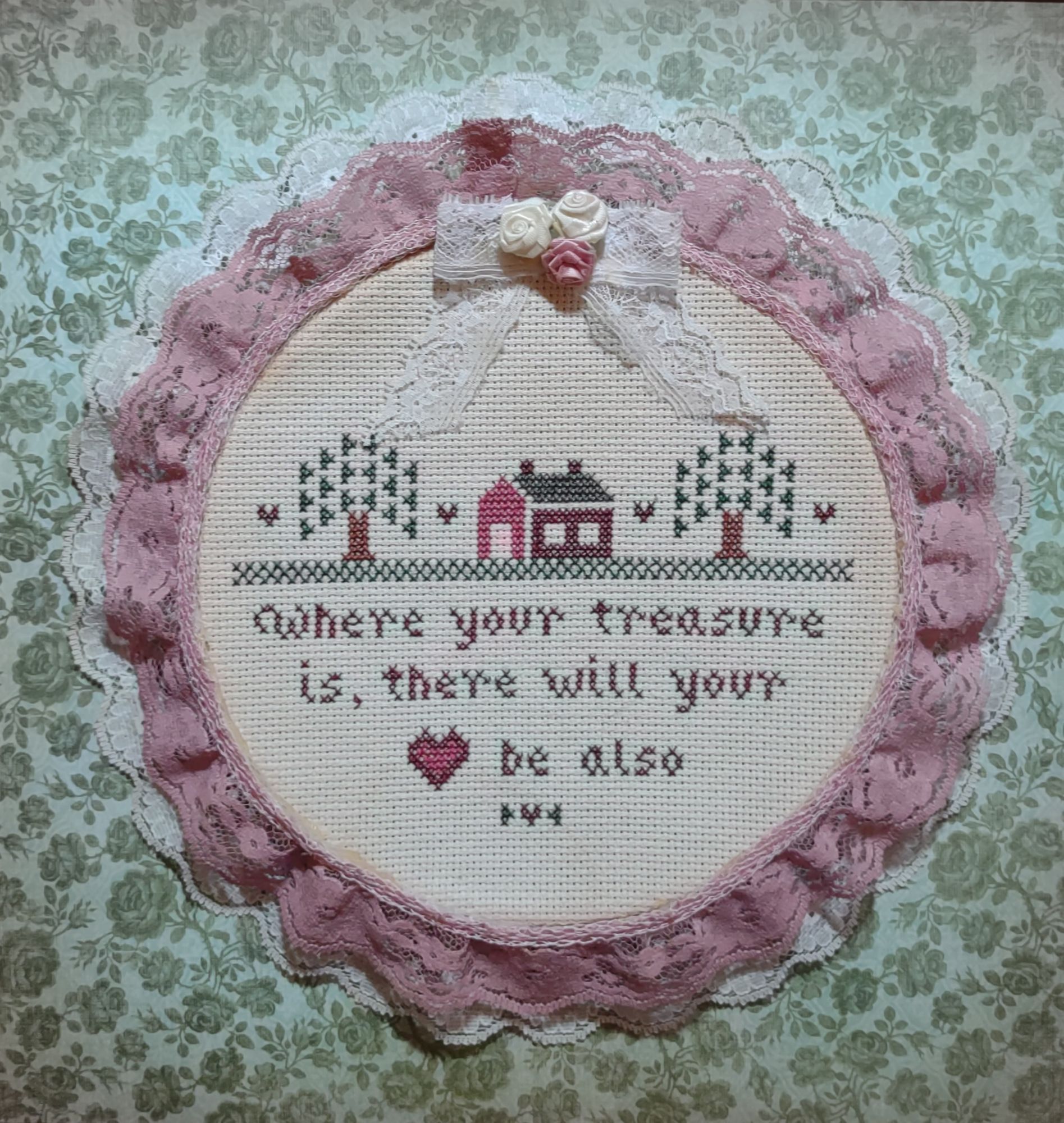
Woods wrote, “The Amish have a guiding principle that seems to rest on Jesus’ words: to only live with things that they really use. And to treasure them.” At the end of the chapter on Simplicity, she poses the question, “Look around the room where you are right now. What is gathering dust? Does it have value to you? Think about the things that share your space — are they things you value or do they hinder what really matters in life?” Then she poses a harder question, “How would you describe simple living? Fewer possessions? Fewer choices? Or what about an emphasis on only the things that really matter?”
Lo’ and behold we now have all sorts of decluttering experts and minimalist experts these days promising that if we pare down on the “stuff” we’ll find more peace and contentment in our lives. Fisher explained, “It relates to guarding well what the Amish truly treasure: their families, their homes, their communities, their faith.” They keep their priorities clearly in focus, not the glitter of new gadgets or pop psychology that everyone else is buying.
Woods explained something I didn’t really understand about the Amish and how they choose which modern things to use and which they shun. Practices vary, because church leaders in different Amish sects make those decisions and sometimes it’s a period of probation, weighing out its long-term effect. Woods explained, “And always church leaders consider where a change could lead the younger generation. They try to see beyond the immediate benefits of change to the effects it could have down the road. How could this new technology or gadget tempt someone away from the church? Or to disobey God?”
The Amish are big on setting limits on almost everything. Fisher explained the Amish believe that maintaining a connection to the land and farming is vital, but Amish mostly keep their farms to no more than eighty tillable acres. They limit the size to something manageable by their family. They also keep their communities small and will split them into another community if they grow too much. The goal is so that everyone in the community knows everyone else and is connected. She explained that it’s not only stuff they try to limit, but they also try to avoid temptations. I’ve heard diet experts for years advise that the easiest way to avoid junk food and bad snacks is to not buy it – avoid the temptation. There are other experts (and a whole marketing effort selling 100 calorie snacks & small portions) that urge carefully limiting the amount of snacks. We’ve got more “addictions” in our modern age than most of us can keep track of and all of that speaks to a people with so many diversions and choices, yet an inability to set limits and boundaries.
Another interesting limit mentioned in this book was some Amish church leaders were concerned that phones might encourage gossiping and interfere in people taking the time to meeting in person, which is a central part of Amish life. Just thinking about how life changed from phones to cell phones and the advent of messaging, well, I’ve been frustrated and felt alone sitting at the same table with some family members or other people who are engrossed in their cell phones and don’t even make eye contact or carry on conversation. Loads of people avoid actual phone conversations now and opt for text messaging.
The internet changed the world in many positive ways, despite all the bad things that have stemmed from it. I realized many years ago that I can learn many hands-on tasks better via watching videos than by step-by-step manuals and diagrams and pictures. With some new needlework/craft projects, I watch the videos, pausing, and then performing each step, to get the hang of it. The ability to rewind and watch the task performed as many times as I need to is much better than trying to look at a diagram or picture. Plus, with many videos the instructions come with advice on common problems and trouble-shooting, and often cheerful encouragement.
On the negative side, the internet can also be a huge time suck, where I can waste hours browsing, watching videos, reading a lot of pointless information rather than devoting that time to more worthwhile endeavors. There’s an even darker side to the internet that leads many people down very dark paths – porn, gambling, scams, and every other sort of human vice, often luring or preying especially on young people or the elderly.
Since I was a kid, I’ve been clipping newspaper and magazine information, project ideas, recipes, etc. and I still print out a lot of recipes and craft/needlework information. As long as the internet is easily available and Pinterest exists, well, I am going to take advantage of that. I also won’t voluntarily discard all of the modern conveniences. However, I am trying to work on limiting my screen time and avoiding online hot take news and social media drama.
An interesting thing about gadgets is with my four oldest granddaughters, I bought them several kindles over the years and then a few years ago they told me they prefer actual books. I think 2020, and all that “virtual learning” turned off many kids to sitting and looking at screens all day long. One of my granddaughters told me it just feels better holding a book. Another interesting trend is despite all the options for digital music, record players and actual vinyl records are making a comeback. One of my 16 year-old granddaughters wanted a record player for Christmas. However, the toss side of this is that most young people, according to survey after survey, would like to be a social media influencer and millions upon millions of young people grew up without any social boundaries, where posting selfies (many inappropriate) and updates on just about every moment of their lives is fairly common. Down the road, surely many will regret their youthful social media posts. There are loads of adults who get emotionally invested in engaging in social media drama too.
With social media, along with the awful, there are amateur content creators who produce worthwhile content of all sorts. I’m trying to choose more carefully whose advice, instructions, ideas, even recipes I’m going to follow. This goes for letting any media influence my emotions too, because even many people online, who wax on about their Christian values, can spread unverified information, negativity or ideas and advice that runs counter to what matters to me.
I am not Amish. While my family heritage is mostly PA Dutch, my family isn’t Amish or Mennonite. My ancestors were early PA Germans settlers, many in the mid 1700s, at the same time many Amish arrived, but they were German Reformed and lived more secular lives. There are still small enclaves in rural PA where the people cook traditional PA Dutch food and some still speak PA Dutch. My father and his relatives spoke PA Dutch around each other, but they spoke English too. My family attended a UCC church, that had been a German Reformed church, not Amish or Mennonite, and we lived like modern Americans, but I have always been fascinated by the Amish.
Most of us aren’t going to voluntarily give up modern conveniences or try to live like the Amish, but there’s merit in their devotion to simple living and making careful choices on which modern technology we allow into our lives. Very few gadgets and appliances live up to their hype or end up adding any real value to my life whatsoever. Even more worrisome is some have negative impacts on people’s lives. Living under a microscope, where every touch on a keyboard or click of a mouse and even how long we look at a screen is recorded and sold as “data” or that could be used to label us, should raise alarm bells about our privacy and personal liberty. I find it alarming and creepy how if I look at some item online and ads for that item shows up everywhere I go online. I don’t want household appliances that monitor every step I take, every move I make and government or corporations using that data to manipulate, judge, label or try to control me.
The larger concerning issue with modern technology is it’s ability to divide and isolate people. The idea that the internet would unite the world sure hasn’t panned out. The Amish believe in living simply, in close-knit communities, where their families and neighbors all know each other and more importantly are committed to each other’s welfare. It’s that commitment to each other that is the vital building block of community.
In 2021 Sharyl Attkisson, an investigative reporter, went to talk to the Amish and looked into how they handled the pandemic. She reported, “The Amish community in Lancaster, Pa., (and Amish counties across the state) is making it through the pandemic without experiencing a catastrophic loss of life despite its refusal to adopt many of the safety precautions portrayed as necessary to prevent widespread loss of life. While officials in most U.S. cities ordered businesses and churches to close for several months in an attempt to slow the spread of COVID-19, the Amish continued working and never stopped worshiping together at church.”
The Amish wanted no parts of the pandemic social mitigation efforts to isolate sick family members or neighbors and many refused to go to a hospital, preferring to take their chances being cared for at home by family and friends vs. not being able to see loved ones.. She continued, “In fact, the CDC shows that counties like lancaster, with substantial Amish populations, have the lowest Covid rates in the state. Lower, in fact, than areas that still have mask and other health mandates in place.” In the beginning of the pandemic, COVID raced through Amish communities, but they continued living their lives as normal.
Building real communities, where members of the community work together on common goals and care about each other’s well-being and welfare, is what has kept the Amish thriving for hundreds of years. It’s also what has historically created close-knit communities all over the world. All the technology in the world can’t replace those simple human connections. While it sounds so easy, for many of us searching our own hearts and reaching out a hand to even people we care about can be challenging and we’re all inundated with information overload that can keep us distracted and unable to even focus on the simple things that really matter. Getting back to the basics might be the key.
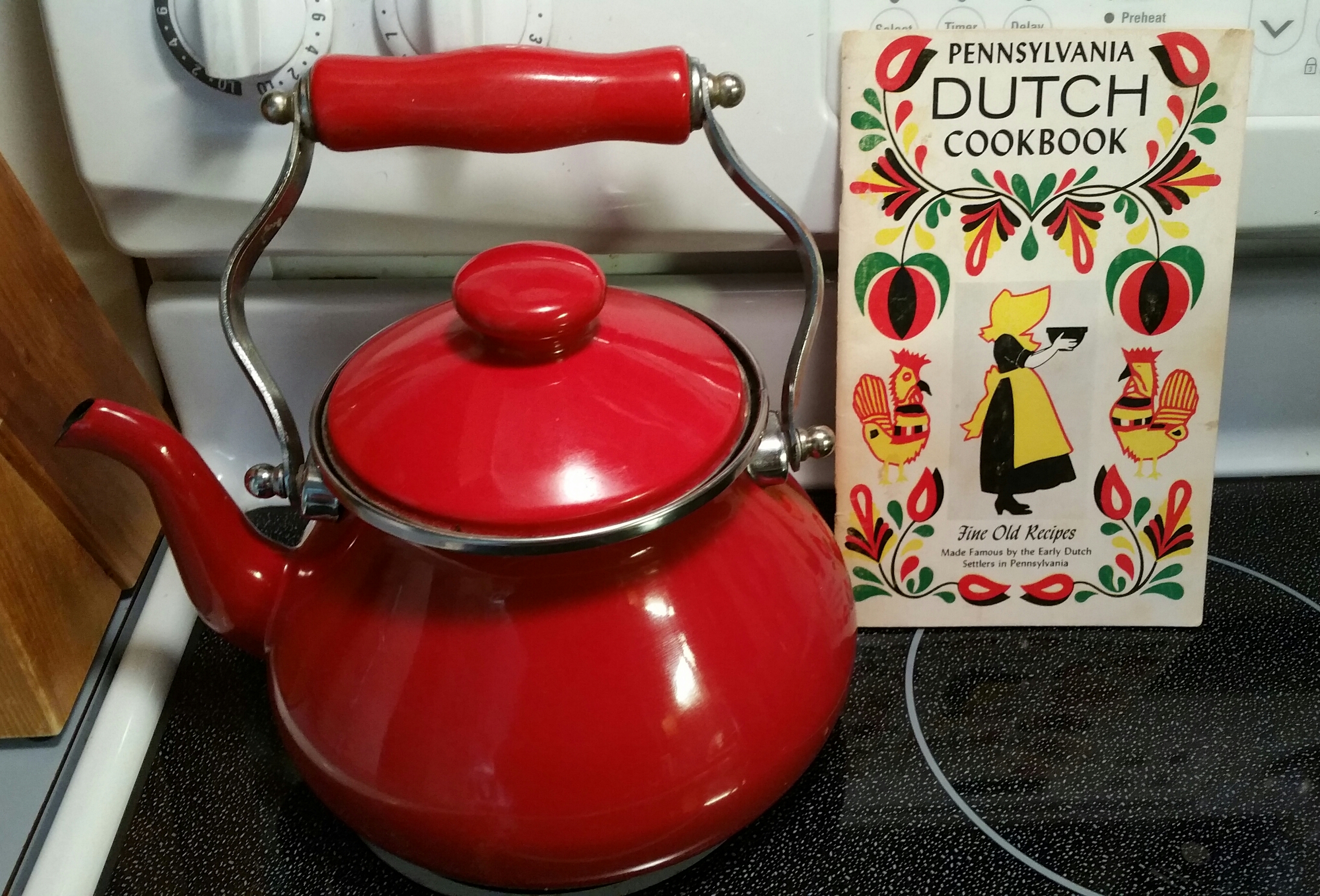
Note: I stuck in a few photos of some of my PA Dutch themed cross stitch, a PA Dutch hex sign I have in my foyer and a PA Dutch cookbook I’ve had for decades. The Amish boy and girl cross stitch at the top is a Diane Graebner design. Graebner’s Amish art is very popular and many of her designs have been converted into cross stitch patterns.
 libertybelle diaries